Email : sales@xhanco.com
Phone : +8619129236778
Key takeaways. A supplier’s claim that a resin is “food grade” does not, by itself, establish that a printed, coated or laminated finished package is suitable for every food or use condition. For US-bound packaging, buyers should identify the substances that may reasonably migrate into food, their applicable regulatory basis and the limits of that basis. The specification also needs to describe the actual food, temperature, time and construction being purchased. The US Food and Drug Administration (FDA) explains these points in its guidance on determining the regulatory status of food-contact material components.
For an airline caterer, bakery or foodservice distributor, this distinction affects an everyday sourcing decision: a film or box that performs well in one application may require a different assessment when the food, temperature or contact layer changes. This is a documentation and validation question, not a claim that any particular XHANCO item is cleared for a specified US use.
The FDA describes a food-contact substance as a substance intended for use as a component of materials used in manufacturing, packing, packaging, transporting or holding food, where that use is not intended to have a technical effect in the food. A finished package may combine a base polymer with coatings, adhesives, inks and other components. Buyers therefore need a bill of materials that identifies the layers and which surfaces touch the food. A one-line certificate about the base polymer cannot replace that construction-level review.
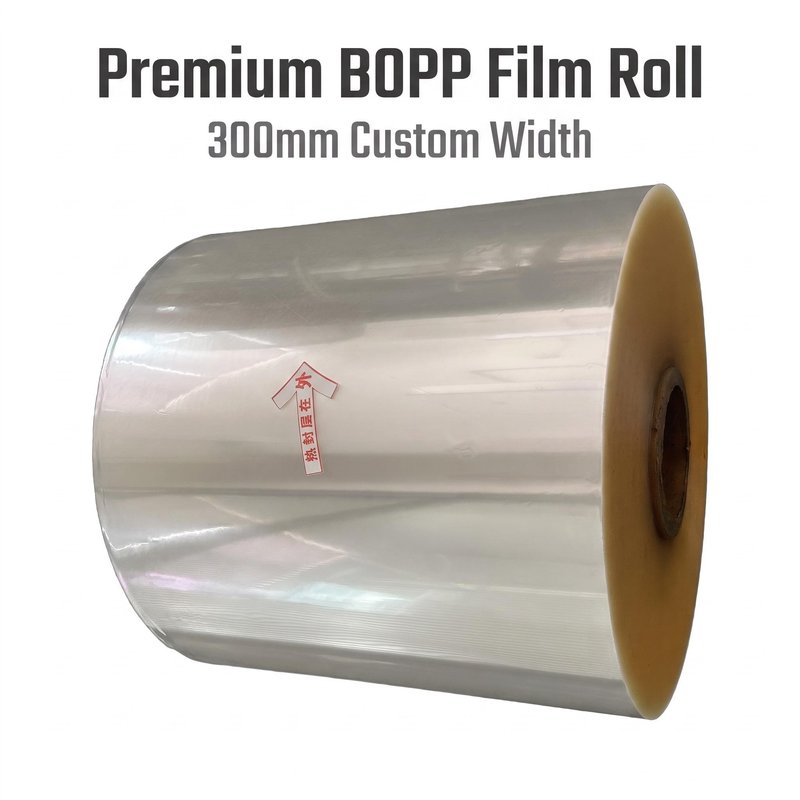
For example, XHANCO lists a 300 mm, 30-micron BOPP heat-seal film roll. A buyer considering it for direct food contact should specify which film face contacts the food, whether a heat-seal coating is present, the packed food, the filling and storage temperatures, and the seal process. If an ink or adhesive is introduced into the final structure, it belongs in the assessment too. The catalog dimensions are useful for a line trial; they are not a regulatory clearance statement.
A second example is the square kraft sandwich box with clear PET lid. The board, any inner coating and the lid are separate material questions. Chilled sandwiches, warm bakery items and fatty foods do not necessarily present the same contact conditions. Buyers should request the intended-use statement for the supplied construction and check the finished box in a representative pack-out trial.
The FDA’s inventory of effective food-contact substance notifications is a useful verification starting point. An effective notification is not a blanket approval for all suppliers and uses: the FDA states that it is effective for the manufacturer or supplier identified in the notification and for its specified use. A buyer should compare the named notifier, substance, intended food type, conditions of use and limitations against the actual supply chain. A notification number quoted without this comparison is weak evidence.
Other regulatory routes may apply to particular substances. The correct route depends on the component and use, so buyers should ask the supplier to identify the basis rather than assume that every material needs, or has, a food-contact notification. FDA’s food types and conditions-of-use reference helps frame the intended application.
This checklist supports supplier qualification but does not substitute for a buyer’s legal or laboratory assessment. It also prevents a common commercial problem: accepting a sample on the strength of a broad marketing phrase and discovering late in the project that the evidence describes a different material or use.
The FDA framework and the limits attached to any applicable authorization must be considered for the intended US use now. This article does not identify a new, universal future US phase-in date for all food packaging, because none follows from the FDA sources cited here. If a buyer is planning a later launch, the team should recheck current FDA materials and state or local requirements at the time of approval instead of treating a 2026 supplier declaration as permanent clearance.
For a specification-led quote, send XHANCO the food type, pack format, target dimensions, contact and storage conditions, printing requirements and destination market through the contact page. The team can then discuss a sample and the material information needed for your own qualification process.
Cover: Original conceptual illustration generated for this article; it does not depict a XHANCO product, facility, test or certification.
Email :sales@xhanco.com
Email :Sales@xhanaero.com
Tel :+8619129236778
Whatsapp : +8619129236778
4/F, Building E, No. 5 Xinhe South Road, Zengcheng District, Guangzhou, China


Leave A Message
Scan To Wechat :

Scan To WhatsApp :


 Product categories