Enter product details (such as color, size, materials etc.) and other specific requirements to receive an accurate quote...
Leave A Message
If you are interested in our products and want to know more details, please leave a message here, we will reply you as soon as we can.
submit
Home

News

News

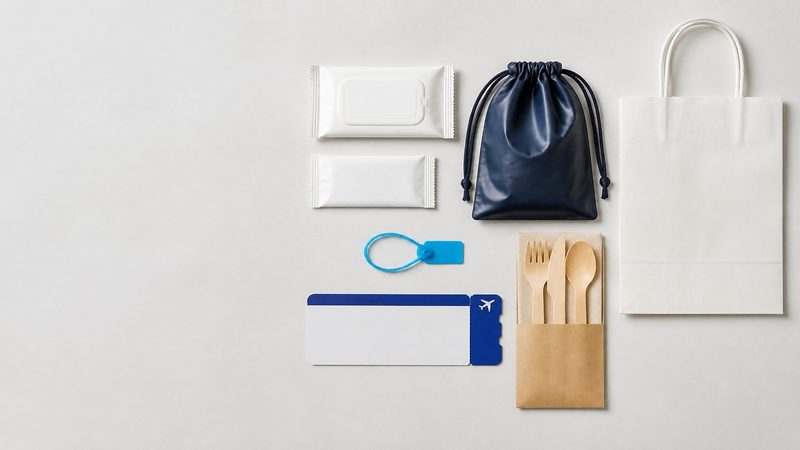
  • Beyond inflight meals, airlines and airports procure a wide range of consumables for cabin service and ground operations. In 2026, procurement teams that consolidate these items under fewer qualified suppliers reduce both cost and compliance risk. The 2026 cabin and ground supply checklist Cabin hygiene: individually wrapped wet wipes, refreshing towels, amenity items Foodservice: meal boxes, foil containers, cutlery kits, paper cups, napkins and bread bags Waste management: drawstring garbage bags, airsickness bags, biodegradable waste bags Security: numbered plastic seals, hang-tab seal tags for catering carts and cargo Documentation: direct thermal boarding passes, baggage tags, printed labels Distribution: paper carry bags, kraft hand bags for duty-free and meal-kit delivery Why consolidation wins Each product category needs certification documentation, batch consistency and reliable delivery. A supplier that covers multiple categories under one quality system simplifies audits, reduces logistics complexity and gives procurement leverage on pricing. Airlines and airport operators increasingly structure tenders to reward exactly this kind of consolidated supply. Source: based on airline and airport consumables procurement categories in 2026 practice

    Read More

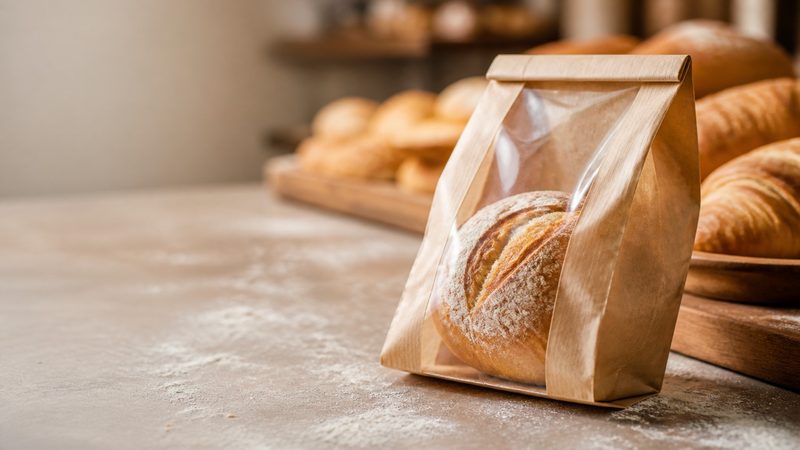
  • Freshly baked goods release oil and moisture - the two enemies of plain paper packaging. In 2026, PE-laminated food paper and coated bread bags have become the standard for bakery, takeaway and inflight snack packaging because they combine paper's printability with an effective barrier. Why barrier performance matters Oil resistance: prevents grease soaking through the bag, which weakens structure and spoils presentation Moisture resistance: stops condensation from cooling goods making the bag translucent or soggy Product visibility: transparent PE windows show the product while the paper body carries branding Food-contact safety: food-grade coatings and films safe for direct contact with bakery items Specification guidance When sourcing bread bags and bakery packaging, confirm the barrier type (PE-coated paper, laminated film, or both), the window configuration and the food-contact certification. For inflight snack service, compact formats that fit tray tables while keeping product fresh through the distribution cycle are the priority. Source: based on food packaging material practice for bakery and snack applications

    Read More
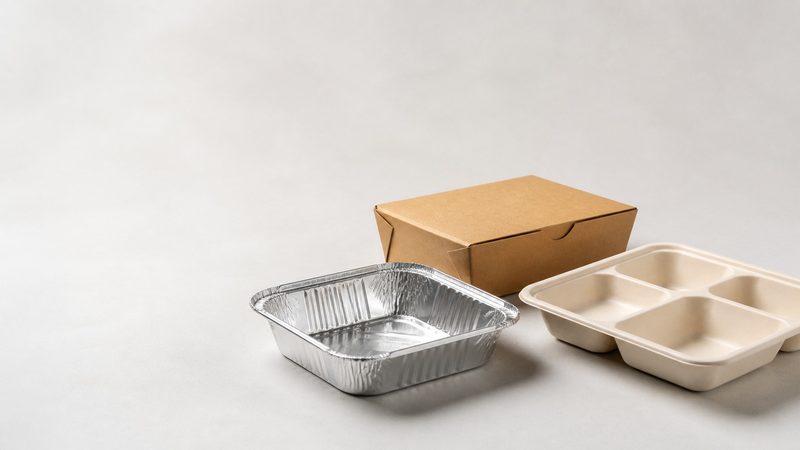
  • Airline meal containers come in three material families - paperboard, aluminium foil and plastic (including biodegradable options) - each with distinct performance for heating, sealing, weight and sustainability. The right choice depends on the meal type, service class and kitchen workflow. Decision guide for catering buyers Paperboard meal boxes: printable, branded, lightweight - the standard for economy meal presentation with custom artwork; food-contact certified Aluminium foil containers: oven-ready, high structural rigidity, infinitely recyclable - for heavy portions and high-heat reheating; heavy-gauge options prevent deformation Plastic / PLA compartment trays: portion-controlled compartments, hinged lids - efficient assembly; biodegradable grades for sustainability programmes Bagasse trays: biodegradable, microwave and freezer safe - for eco-focused service and central kitchen portioning Practical guidance Most 2026 airline programmes combine: paperboard boxes for branded economy meals, foil for large or high-heat portions, compartment trays for multi-component meals and bagasse for sustainability-led routes. Consolidating these formats with one qualified supplier reduces procurement complexity and freight cost per item. Source: based on airline catering packaging practice and 2026 material market conditions

    Read More
  • Most foodservice packaging buyers start with a sample approval, then scale to repeat orders. The difference between a smooth scale-up and a quality problem is the discipline around sample documentation - the approved sample must become a written standard, not a memory. The five-step OEM process that prevents drift 1. Requirement mapping: use scenario, dimensions, material, printing, packing and destination-market compliance confirmed in writing 2. Quotation: specification-based pricing with MOQ, lead time and Incoterms 3. Artwork and sampling: digital proof, then physical sample built to the written specification 4. Sample approval: the approved sample is documented as the acceptance standard 5. Batch production: every batch inspected against the approved sample - not against interpretation What buyers should demand Ask suppliers to document the acceptance standard in writing and to state how batches are inspected against it. Ask how reorders are handled - whether the same standard applies without re-proofing. Suppliers that follow this structure (like Xinghan's OEM workflow) deliver consistency; suppliers that rely on memory deliver variance. Source: based on Xinghan OEM/ODM production workflow (industry-standard sampling and approval methodology)

    Read More
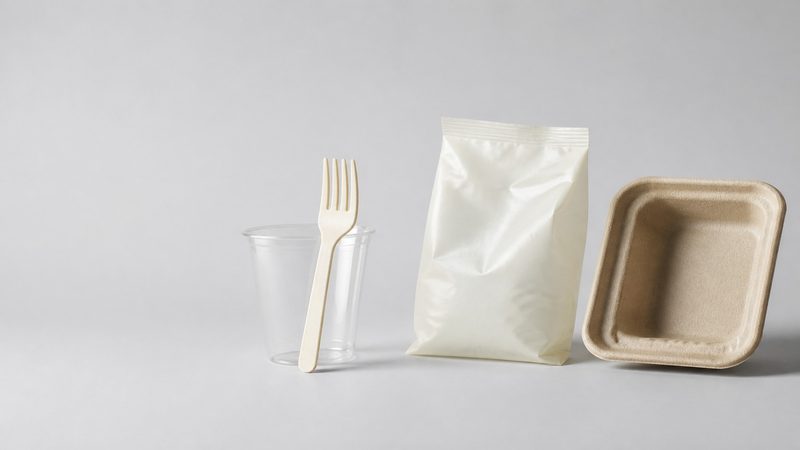
  • Biodegradable food packaging is not one material but a family of materials with different properties, certifications and cost structures. Choosing correctly in 2026 means matching the material to the product, the service temperature and the destination market's standards. The three workhorses compared PLA (polylactic acid): plant-based, rigid, compostable - best for cutlery, cups and clear films. Temperature-sensitive above 60C; certified compostability under EN 13432 / GB/T 38082 PBAT (butylene adipate-co-terephthalate): flexible and tear-resistant - used in bags and films, usually blended with PLA for balance of strength and cost Bagasse (moulded fibre): made from sugarcane pulp - rigid trays and plates, microwave and freezer safe, fully compostable Buying guidance For cutlery and cups, specify PLA with documented compostability. For carrier bags and self-adhesive packaging, PLA/PBAT blends give the durability daily use requires. For meal trays that must move from freezer through oven to service, bagasse is the practical choice. In every case, verify the certificate matches the destination market's standard - not just the supplier's description. Source: based on 2026 market data for PLA and PBAT capacity and pricing (GEP Research); material characteristics per industry certification standards

    Read More
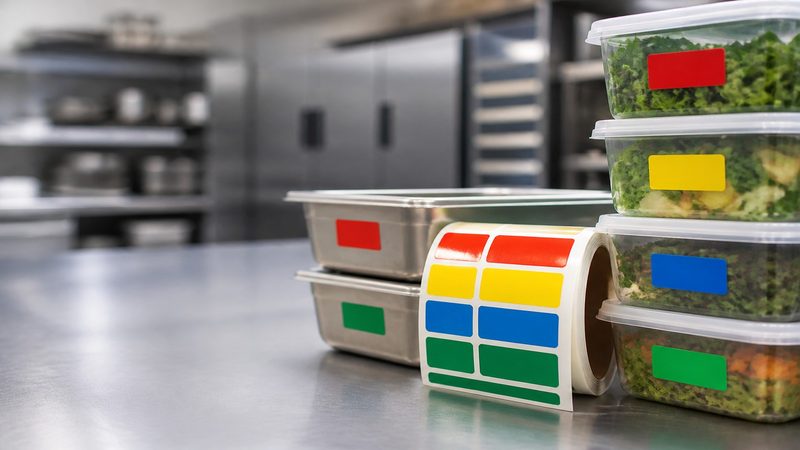
  • Food production traceability is a daily operational problem in airline catering, central kitchens and institutional foodservice: identifying which batch was produced when, by which shift, for which flight or outlet. Colour-coded removable labels are the low-cost solution that kitchens around the world standardise on. How the system works One colour per weekday: staff recognise production dates at a glance without reading text Pre-printed shift slots: 00:00-08:00 / 08:00-16:00 / 16:00-24:00 circled in seconds Blank writing area: handwritten batch codes, lot numbers or flight identifiers Removable adhesive: sticks firmly to containers and trays, peels cleanly with no residue on reusable packaging Why removable adhesive matters In cold-chain and reusable-container workflows, labels that leave residue create hygiene and compliance problems. A removable-adhesive label eliminates that risk while surviving normal chiller and transport handling. For multi-shift operations, the colour system reduces misidentification errors that lead to waste or - worse - compliance findings. Source: based on food-service production control practice (batch labelling methodology)

    Read More
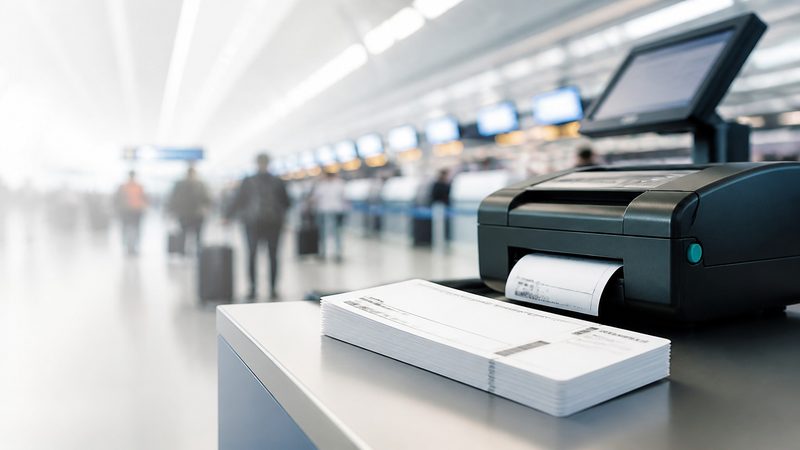
  • Boarding passes remain one of the highest-volume printed items in aviation, printed in real time at check-in counters, kiosks and gates. The material quality of the card stock determines whether thermal printers image reliably, whether barcodes scan at boarding gates, and how much print waste an airport generates. What to specify for boarding pass stock Three-proof thermal coating: resistance to heat, light and friction - the three conditions that degrade thermal images in airport environments GSM matched to use: heavier card (e.g. 190gsm) holds its shape through passenger handling and archiving IATA-standard dimensions: 203.2 x 82.55 mm compatibility with existing printers and readers Perforation: detachable stub for gate agent retention procedures Print readability: consistent thermal imaging across printer models from different manufacturers Cost of poor stock Low-grade thermal paper causes barcode scan failures, faded prints and printer jams - each costing time at the busiest points of passenger flow. Airports and airlines that standardise on quality card stock reduce reprints and accelerate throughput, which is why boarding pass supply is increasingly managed as a certified, specification-controlled category. Source: based on airline operations practice for direct thermal boarding pass materials (industry specifications)

    Read More
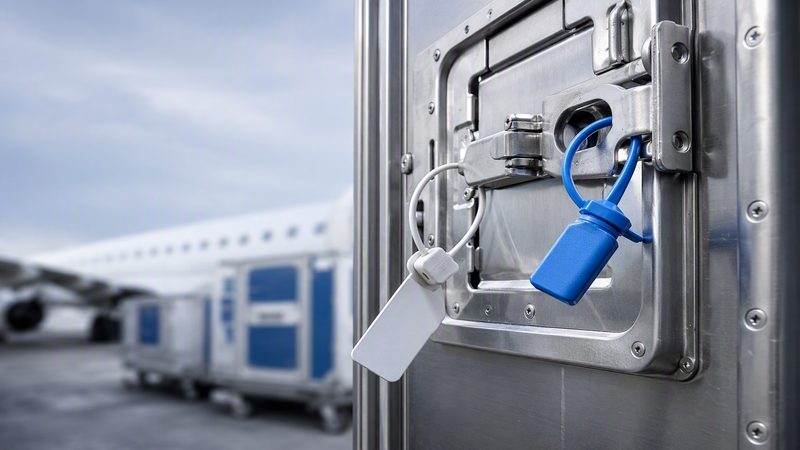
  • Tamper-evident security seals are a quiet but essential part of aviation supply chains - sealing catering carts, cargo containers, baggage and valuables. In 2026, the trend is toward numbered seals and scan-based tracking that link each sealed unit to a digital record. What procurement teams should specify One-time-use locking: irreversible self-locking mechanisms that leave permanent evidence of opening Sequential numbering: unique ID per seal for batch tracking and chain-of-custody documentation Scan capability: barcode or QR printing for integration with digital tracking systems Material integrity: high-tenacity PP that resists bending and tearing under operational handling Why seals matter more than their unit cost A compromised seal can void a consignment's integrity record - an expensive failure relative to the seal's cost. Institutional buyers are therefore consolidating seal supply with manufacturers that can customise numbering, colour-code by department or route, and document material test reports. For airline catering, the same seal logic applies from kitchen to aircraft. Source: based on supply-chain security practice in aviation and logistics (industry standards for tamper-evident devices)

    Read More
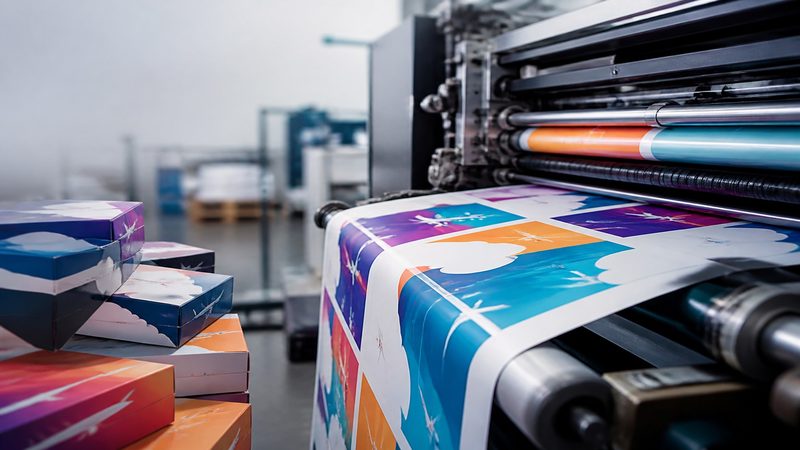
  • Custom-printed meal boxes, cups and carry bags are a core part of airline brand presentation, yet many buyers underestimate the importance of structured artwork proofing. A printed packaging project that lacks proof discipline produces inconsistent colour, misregistered print and rework - at significant cost in both money and brand image. The proofing process that works Artwork readiness: vector files (AI/PDF) with fonts outlined and colour references defined Digital proof: colour-accurate proof submitted before any plate is made Physical sample: printed sample approved against the specification - dimensions, material, print, finish, packing Batch standard: the approved sample is retained as the acceptance standard for every repeat order Why it matters for repeat supply Airline catering runs on repeat orders. A documented approved sample means every batch is inspected against the same standard - no interpretation, no drift. Buyers who insist on this discipline get stable quality across reorders and avoid the most common failure mode in printed packaging: quality variance between batches. Guangdong Xinghan Industrial operates a licensed printing operation and follows this proofing workflow for airline, catering and food brand packaging. Source: based on industry standard practice in packaging print management (Xinghan internal production workflow)

    Read More
  • Across markets, 2026 has brought a new wave of plastic tableware restrictions. From EU single-use plastics rules to Asia-Pacific bans on EPS boxes and plastic cups, the regulatory environment for foodservice packaging is tightening faster than most procurement cycles. 2026 policy highlights EU: PPWR applies from August 2026 with PFAS restriction and recyclability requirements; additional single-use plastic formats banned from 2030 China: continued implementation of the plastic pollution control plan; green consumption promotion pushing degradable alternatives in hotels and foodservice Asia-Pacific: expanded bans on styrofoam (EPS) tableware and plastic straws across multiple markets Australia: Victoria's 2026 plastic ban fully implemented, with cornstarch tableware capturing a majority of the local eco-packaging segment Practical takeaway for buyers The direction is consistent worldwide: certified degradable and paper-based alternatives are the safe default for any foodservice packaging bought in 2026. Buyers should verify each product's certification against the destination market's standards before committing - material substitution alone is no longer enough when claims are audited. Source: 2026 Global Plastic Tableware Policy Update; 2026 Global Plastic Restriction Order Roundup

    Read More
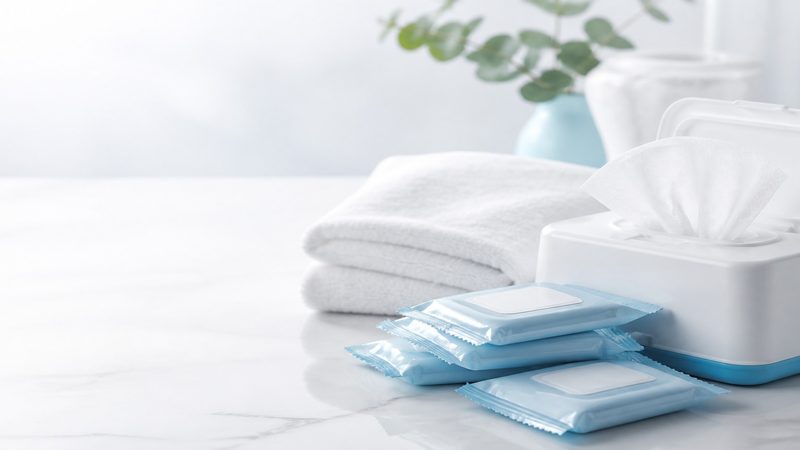
  • The global wet wipes market is projected at USD 32.09 billion in 2026, growing toward USD 43.45 billion by 2034 at a compound rate near 3.9%, according to Fortune Business Insights. Institutional demand - airlines, hotels, catering and healthcare - accounts for a growing share as hygiene standards tighten. Drivers in the institutional segment Airline cabin service: individually wrapped wet wipes remain standard in economy and premium service Hotel amenities: single-sachet wipes are replacing reusable cloths in amenity kits Foodservice: hygiene wipes used in meal assembly and dining service Licensing requirement: in China, wet wipe production requires a provincial disinfection-product hygiene license - a barrier that separates licensed manufacturers from traders Why licensing matters to buyers Institutional buyers increasingly audit wet wipe suppliers for production licensing and batch documentation. A manufacturer producing under a valid hygiene license - with GB 15979 and GB/T 27728 compliance - can provide the documentation that tender and audit processes require, while traders without production capability cannot. Source: Fortune Business Insights - Wet wipes market

    Read More
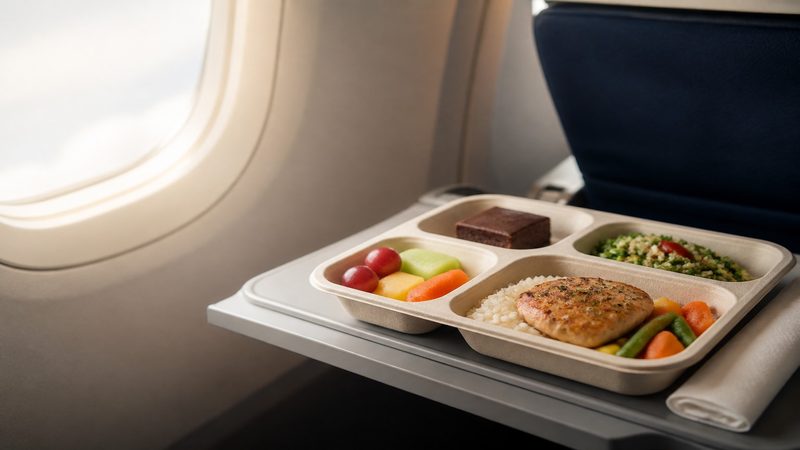
  • Moulded sugarcane bagasse tableware is moving from niche to mainstream in airline catering. As carriers phase out non-degradable plastics, bagasse trays offer a certified biodegradable option that withstands oven heating and freezer storage - two requirements common in inflight meal preparation. Bagasse vs. alternatives in 2026 Bagasse (moulded fibre): fully biodegradable, microwave and freezer safe, food-contact certified - suited to hot meal service and central kitchen portioning PLA cutlery and cups: plant-based, compostable, available in individually wrapped formats - ideal for cutlery kits and beverage service Paperboard with coatings: strong and printable for meal boxes, with coating choices determining recyclability or compostability Aluminium foil containers: oven-ready and infinitely recyclable - preferred for heavy meal portions How buyers should structure the mix Most airlines use a combination: bagasse trays or paperboard boxes for hot meals, aluminium foil for high-heat or large portions, PLA cutlery kits for service, and coated paper cups for beverages. The trend for 2026-2027 is to standardise this mix under documented certification and to consolidate it with fewer, more capable suppliers. Source: Why bagasse tableware is the future of in-flight meals

    Read More
1 2

Leave A Message

Leave A Message
If you are interested in our products and want to know more details, please leave a message here, we will reply you as soon as we can.
submit
Contact us:sales@xhanco.com

Home

Products

WhatsApp

contact