Email : sales@xhanco.com
Phone : +8619129236778
A snack wrapper can look neatly sealed yet still fail the buyer’s real requirements: a reliable closure at production speed, acceptable opening force and protection through storage and handling. For airline caterers and bakery packers ordering heat-seal film, the practical purchasing question is therefore not simply whether a sample seals. It is whether the proposed film and machine can repeatedly make an acceptable finished pack within a documented range of operating conditions.
This application briefing, reviewed on 22 October 2026, explains how to turn a film enquiry into a useful qualification trial. The referenced test standards are established technical tools, not newly announced legal deadlines or certificates for XHANCO products.
Identify what will actually seal to what. Film-to-film snack wrapping, film-to-coated-paper sealing and film-to-tray lidding are different constructions. A shared roll width or the description “heat-seal film” does not establish that the sealing surfaces are compatible. The specification should identify the sealant face, the opposing material and the intended seal geometry before samples are selected.
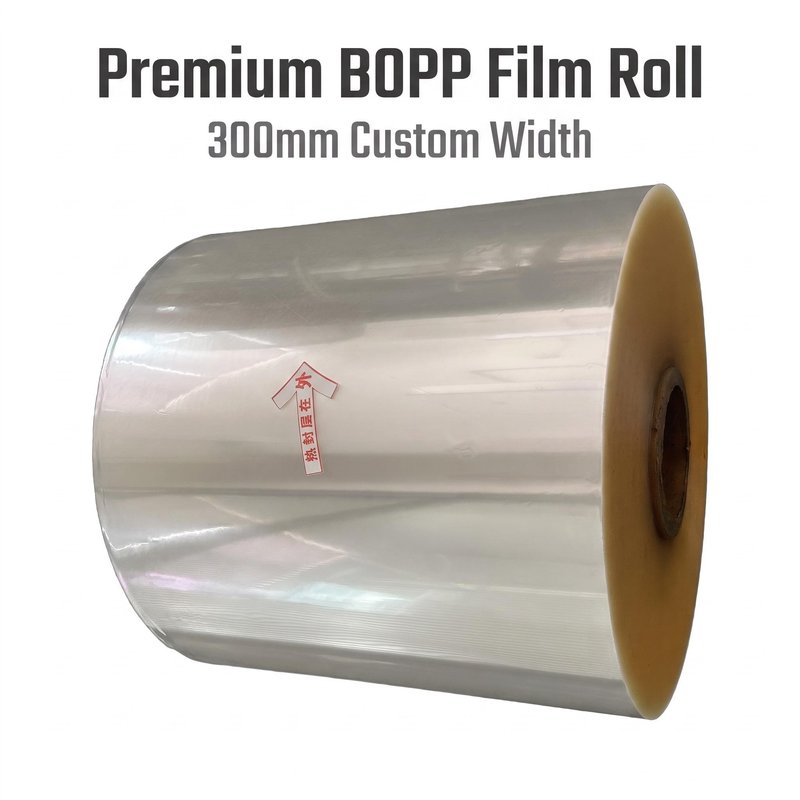
For example, XHANCO’s 300 mm BOPP heat-seal film roll is described for film-to-film snack and bakery packs, with a single-side heat-seal coating. It should not be treated as a universal tray lid. The separate registration-mark OPP/CPP laminated packaging film is an existing roll-supply option for automatic packing applications; its proposed construction and machine requirements still need order-specific confirmation.
Give the supplier the machine model, forming arrangement, seal-jaw configuration, output target and food application. Add roll width, thickness, core diameter, maximum roll diameter, winding direction and registration requirements. Keep a drawing of the seal position with the approved pack dimensions. These details help prevent a sample from being approved for one arrangement and purchased for another.
The public scope of ASTM F2029-16(2021) distinguishes laboratory heat-seal preparation from validation of production equipment. Its heat-sealability results provide starting information for manufacturing trials; differences between laboratory and production equipment require care when transferring the findings.
For procurement, request a trial plan that records temperature settings, dwell time, pressure and line speed together. The useful output is a process window: a documented operating range in which the agreed pack requirements are met. There is no universal temperature setting that qualifies every BOPP film, laminate, machine and food application.
Ask the technical team to examine conditions representative of routine operation, including agreed speed changes and restarts, rather than retaining only the best-looking pack from a short demonstration. Record the film batch, machine identity, settings and sample locations. If wrinkles, incomplete seals or distortion appear, document the affected conditions and corrective action. A revised material or setting should be assessed against the same acceptance criteria.
ASTM F88/F88M-23 measures the force needed to separate a strip containing a seal and records how the specimen fails. That provides useful evidence about seal consistency, but a strip result does not describe every part of a package. For packs intended to peel open, excessive force can also be undesirable. Agree the relevant strength limits and a consistent test arrangement with the responsible laboratory.
Leak detection addresses a different question: whether a package has a detectable escape path under the selected test conditions. ASTM F2096-11(2019), for example, describes an internal-pressurization bubble method for gross leaks. Its scope includes limitations; it is not a universal demonstration that every possible leak is absent. The laboratory should select and justify a method suitable for the actual pack.
A buyer should therefore avoid a single combined “seal passed” entry. Request separate results for appearance, strength, failure mode and the selected integrity assessment, with sample quantities and acceptance criteria stated. If shelf life or transport performance is part of the purchasing claim, establish the additional evidence needed for that claim.
The following is a suggested purchasing workflow, not a substitute for a validated test procedure:
Mechanical pack performance also needs the appropriate food-contact review. The European Commission’s food-contact legislation overview explains the general safety framework, good manufacturing practice and material-specific requirements. A successful sealing trial does not itself establish chemical suitability for a particular food, contact temperature or destination market.
To discuss a film trial, contact XHANCO with the pack drawing, machine details, intended food use, roll specification and quantity. Ask for a proposal that identifies both the sample-trial requirements and the documentation available for the selected construction.
XHANCO developed two custom films for Guangzhou Nanlian Air Catering Co., Ltd. The published project records the following test conditions and outcomes.
Read the complete development and supply case | Use the packaging trial worksheet
Email :sales@xhanco.com
Email :Sales@xhanaero.com
Tel :+8619129236778
Whatsapp : +8619129236778
4/F, Building E, No. 5 Xinhe South Road, Zengcheng District, Guangzhou, China


Leave A Message
Scan To Wechat :

Scan To WhatsApp :


 Product categories