Enter product details (such as color, size, materials etc.) and other specific requirements to receive an accurate quote...
Leave A Message
If you are interested in our products and want to know more details, please leave a message here, we will reply you as soon as we can.
submit
Home

News

News

  • U.S. food-packaging buyers should no longer rely on the 35 FDA food-contact notifications that previously covered certain PFAS-containing grease-proofing agents for paper and paperboard. The U.S. Food and Drug Administration determined that these notifications ceased to be effective on 6 January 2025 after the notified uses were abandoned. A limited compliance period for certain existing paper-packaging stock ended on 30 June 2025. For 2026 orders, buyers should verify the specific barrier chemistry and the authorization basis of the finished package instead of accepting a generic “food-grade” claim. What the FDA actually announced The 35 notifications had covered substances applied to paper and paperboard to resist oil and water. The FDA said the manufacturers or suppliers had stopped producing, supplying or using those substances for the notified food-contact applications. The agency had already reported in February 2024 that grease-proofing substances containing PFAS were no longer being sold by manufacturers for food-contact use in the U.S. market. This is a specific regulatory development, not a claim that every paper package or every barrier coating contains PFAS. It also does not mean that every non-PFAS substitute is automatically suitable for all foods. The intended food type, contact time, temperature and construction still determine which supporting information a buyer should request. Where the issue touches real products Bakery bread bags A printed food-paper bread bag may use a laminated layer to manage moisture or grease. The buyer should identify every food-contact layer, specify whether the food is dry, oily or warm, and request evidence for the proposed finished structure. The existence of a laminate does not by itself establish PFAS content or U.S. compliance. Sandwich and takeaway boxes A kraft sandwich box with a PET lid combines different materials. Paperboard, any surface treatment, printing and the plastic lid should be reviewed according to their actual contact with food. Oil-rich fillings, sauces and condensation make barrier selection and leak testing especially important. A five-point RFQ checklist for U.S.-bound paper packaging Describe the food and use conditions. State whether the package holds dry bakery goods, greasy sandwiches or hot takeaway food, plus maximum contact time and temperature. Request the complete material structure. Record paper grade, coatings or laminates, adhesives, inks and the intended food-contact surface. Ask for the regulatory basis. The supplier should identify the applicable authorization or other lawful basis for each relevant food-contact substance in the proposed structure. Verify the PFAS statement precisely. Ask what substances and tests the claim covers; avoid treating a broad “PFAS-free” label as a substitute for a technical declaration. Approve a finished sample. Test oil resistance, moisture handling, seams, lid fit and printing using the actual food or an agreed representative condition. What suppliers and buyers should do next For new U.S. programmes, procurement and quality teams should keep a version-controlled specification, supplier declarations, relevant test reports and sample approvals together. If the paper treatment, laminate, ink or converter changes, the compliance review should be repeated for the revised construction. Buyers serving both U.S. and other markets should identify destination requirements separately rather than assuming one document covers every market. XHANCO can discuss paper and laminated packaging options against a buyer’s intended application. Send the food type, dimensions, barrier target, printing artwork, destination market and estimated volume through the enquiry page so that the proposed construction and documentation can be reviewed before mass production. Official FDA sources FDA constituent update: 35 PFAS food-contact notifications no longer effective FDA: authorized uses of PFAS in food-contact applications

    Read More

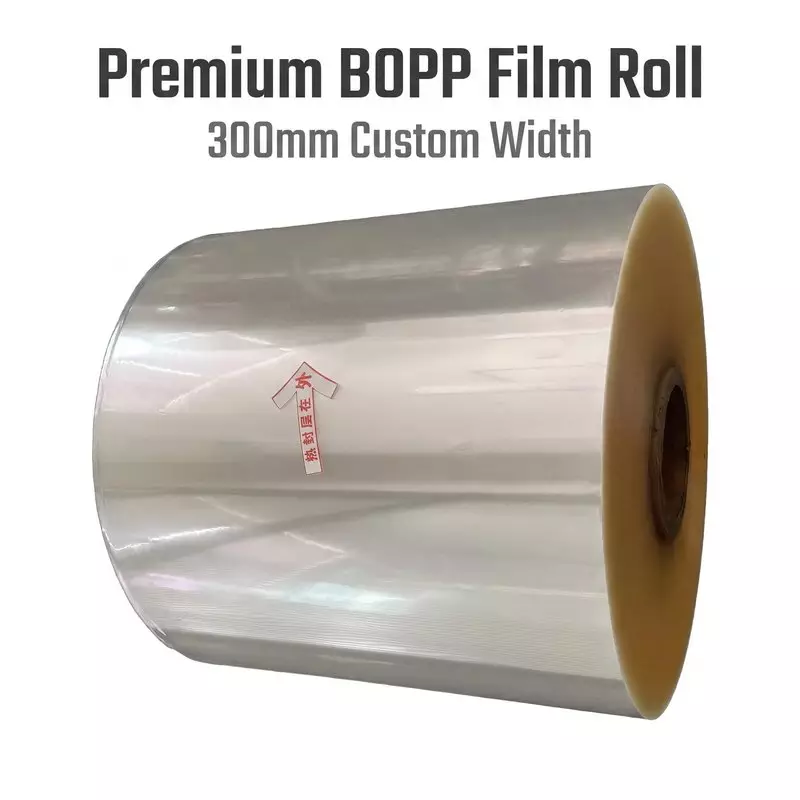
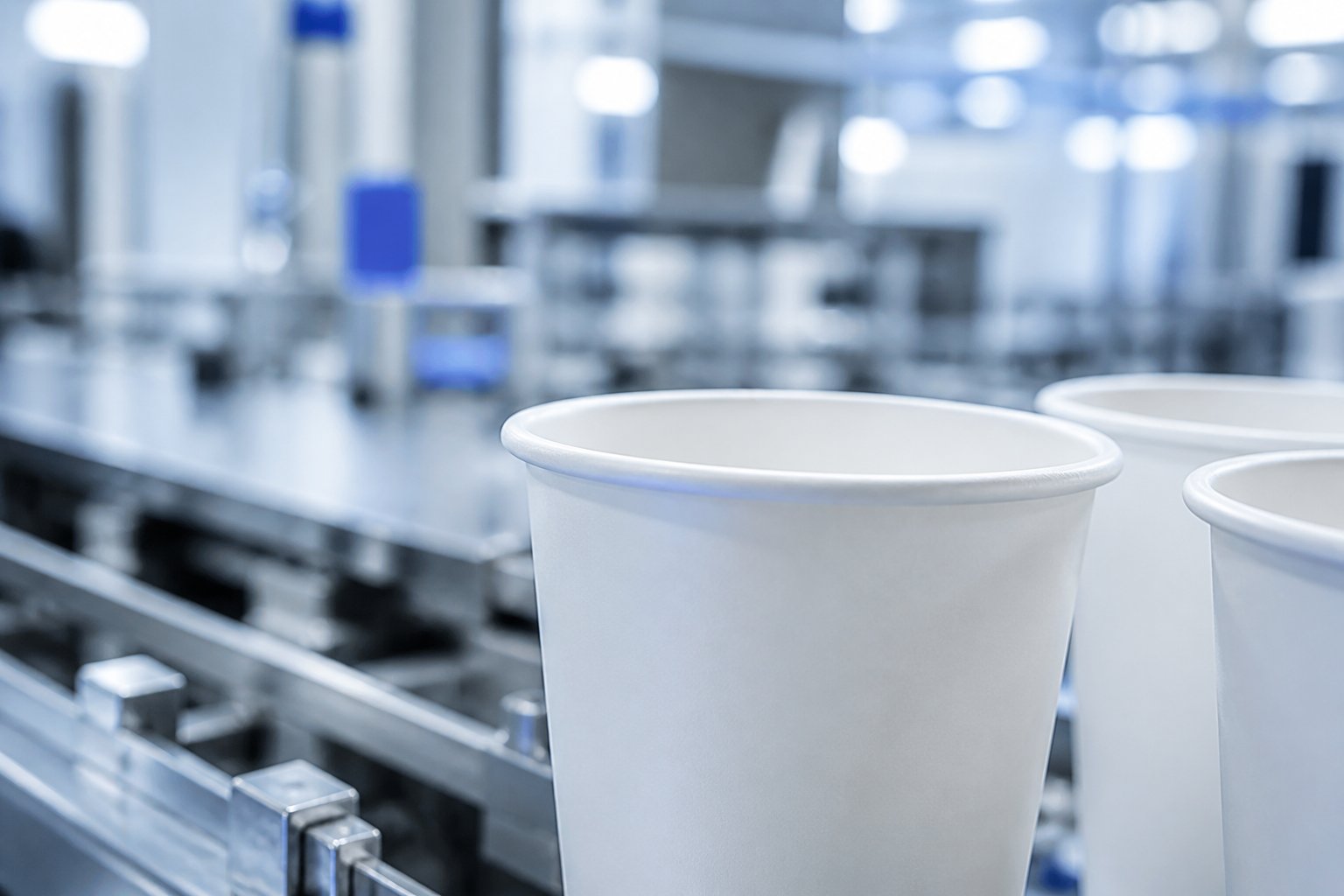
  • For EU buyers, 16 September 2026 was a practical compliance cut-off for plastic food-contact materials under Regulation (EU) 2025/351. Plastic food-contact materials and articles that complied with the previous rules and were first placed on the market before that date may continue to be sold until stocks are exhausted. Products first placed on the market after the cut-off should be assessed against the current requirements. This is a transition rule, not a blanket ban on plastic packaging. Why the deadline matters to packaging buyers Airline caterers, foodservice distributors and private-label buyers often source several components at once: meal containers, lids, coated cups, sealing film and flexible packs. Each component may have a different material structure, food type, contact time and temperature. A generic statement such as “food grade” is therefore not enough for a serious technical file. The updated EU framework strengthens the information expected in declarations of compliance and supporting documentation. Buyers should pay particular attention to composition, non-intentionally added substances (NIAS), substances originating from waste streams, manufacturing quality controls and the test conditions used to demonstrate compliance. For repeated-use plastic articles, instructions should also help users slow deterioration, recognise observable changes and understand when the article should no longer be used. Three product applications that need application-specific evidence 1. Heat-seal film for food trays A custom BOPP heat-seal film roll should be evaluated as part of the complete sealing system. Buyers should define the tray material, sealing temperature, contact food, storage condition and expected shelf life. Film thickness alone does not establish suitability. 2. Polypropylene airline meal containers For a PP airline meal container with a clear lid, the base and lid should be documented separately where their resin, additives or intended temperature ranges differ. The test programme should reflect the actual use case, including hot filling, reheating, chilled storage or fatty foods where applicable. 3. PLA-coated paper cups A PLA-coated paper cup combines a paper substrate, coating, inks and potentially adhesives. Procurement teams should confirm which layer provides the food-contact surface and request documentation that matches the final printed construction and intended hot- or cold-drink use. Six checks for purchase orders placed after the transition Confirm the first market-placement date and batch status. Do not assume that old inventory and newly produced goods follow the same transition route. Lock the complete material structure. Record resin or coating type, thickness, colour masterbatch, inks, adhesives and any recycled-content claim. Request the current declaration of compliance. The document should identify the supplied article, applicable legislation, restrictions and intended conditions of use. Match migration testing to real service conditions. Food simulant, temperature and contact time should be technically relevant to the buyer’s application. Review NIAS and change control. Ask how raw-material, formulation and process changes are assessed and communicated. Maintain traceability. Link samples, approvals, production batches, test reports and shipping documents so that the compliance file can be reconstructed. What buyers should send in an RFQ A useful RFQ states the destination market, food type, maximum contact temperature and time, single-use or repeated-use status, printing requirements, dimensions, annual volume and required documentation. These details allow the supplier to select an appropriate construction and propose a relevant validation plan. XHANCO does not treat one certificate as blanket approval for every market or application; documentation should be reviewed against the final specification and destination requirements. For support matching materials, specifications and testing documents to an airline or foodservice programme, contact XHANCO with the intended use and target market. Official references Regulation (EU) 2025/351 EUR-Lex summary: plastic materials and articles in contact with food European Commission: food-contact materials European Commission: food-contact-material legislation

    Read More
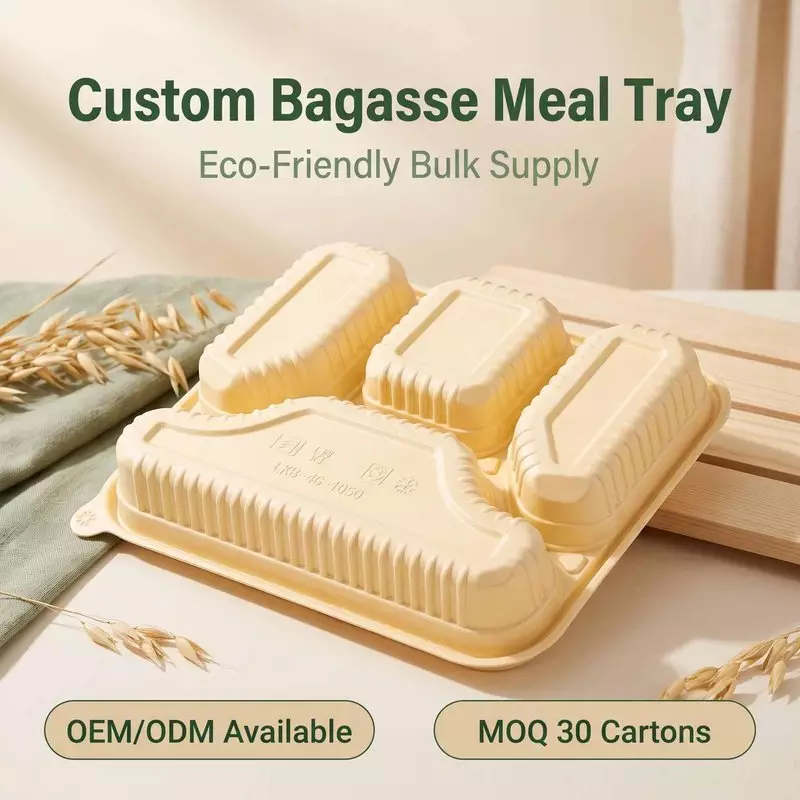
  • The EU Packaging and Packaging Waste Regulation (PPWR) has applied across the European Union since 12 August 2026. For airlines, caterers, foodservice distributors and packaging importers, this changes the procurement conversation: a pack must be evaluated not only for cost and service performance, but also for food-contact safety, material composition, recyclability, documentation and the waste route in the destination market. The European Commission states that the PPWR creates a harmonised framework covering the full packaging life cycle. Some requirements are phased: the Commission notes that mandatory recycled content for plastic packaging and the requirement that all packaging be recyclable will apply from 2030. Buyers should therefore use current sourcing cycles to collect reliable material data and avoid locking future programmes into poorly documented structures. Food-contact compliance remains a separate requirement Environmental positioning does not replace food-contact compliance. The European Commission confirms that all food-contact materials placed on the EU market must comply with Regulation (EC) No 1935/2004 and be manufactured in accordance with Good Manufacturing Practice under Regulation (EC) No 2023/2006. Depending on the material, additional EU rules or national provisions may also apply. For procurement teams, this means that terms such as “recyclable”, “biodegradable” or “compostable” should never be accepted as a substitute for a product specification, intended-use statement and supporting test documentation. Time, temperature, food type and contact conditions must reflect the real application. What buyers should request from packaging suppliers Complete material structure: identify the substrate, coating, laminate layers, inks, adhesives, lids and any functional barrier. Intended-use conditions: define hot or cold food, microwave or oven use, freezer storage, oil and moisture exposure, and maximum contact time. Food-contact evidence: request the applicable declaration, migration or performance reports, test conditions and traceability information for the target market. End-of-life route: confirm whether the complete pack—not only its main substrate—can enter the relevant collection, sorting, recycling or organic-waste system. Change control: require notification before changes to resin, fibre, coating, ink, adhesive, dimensions or manufacturing location. How the checklist applies to common airline-catering products Bagasse meal trays For a four-compartment bagasse meal tray, buyers should verify fibre composition, food-contact suitability, resistance to oil and moisture, performance under microwave or freezer conditions, lid compatibility and the actual end-of-life route available at the destination. A compostability claim alone does not determine whether the complete tray-and-lid system fits a specific waste stream. Coated paper cups For a PLA-coated paper cup, the coating type and weight, cup-board specification, beverage temperature, contact time, printing system and local collection route should be written into the purchasing specification. Buyers should assess the finished cup rather than treating the paperboard and coating as separate sustainability claims. Flexible films and printed wraps For BOPP heat-seal film and other flexible structures, barrier performance must be balanced with material complexity. Procurement files should identify each layer, ink and adhesive, the sealing conditions, food-contact status and whether the finished structure is compatible with the target recycling system. A practical sourcing decision The immediate task is not to replace every packaging format with one material. It is to make every specification auditable. Airline-catering buyers should compare candidate packs against four questions: Does it protect the food? Is it supported for the intended contact conditions? Is its complete material structure documented? Does its end-of-life claim match the infrastructure and rules of the destination market? XHANCO supports OEM/ODM development for airline supplies and foodservice packaging, including material selection, custom dimensions, printing, samples and production quality control. Buyers preparing EU programmes can contact XHANCO with their product application, destination market and documentation requirements for a specification review. Official references European Commission: New EU packaging rules start to apply Regulation (EU) 2025/40 on packaging and packaging waste European Commission: Food Contact Materials European Commission: Food-contact materials legislation and GMP

    Read More
  • Choosing a coating for cups, meal boxes or trays starts with the food and service conditions. A material name alone does not establish barrier performance, heat resistance or a suitable disposal route. Buyers should compare documented finished structures rather than assume that PLA is always better than PE. PLA, PE and dispersion coatings: identify the actual structure Ask the supplier to identify the paperboard, coating chemistry, application process and coating weight. Do not use “PLA coating” and “water-based dispersion coating” as interchangeable descriptions. Request the technical data sheet for the proposed formulation and compare samples made with the intended production process. Food-contact documents: review the specific application For each proposed cup or container, request the material specification, intended-use statement, available declarations and relevant test reports. Check that the documents identify the supplied structure and cover the destination market, food type, contact time and temperature. A company management-system certificate does not replace product-specific documentation. Heat and barrier performance: define an acceptance test State the filling temperature, holding time, storage conditions and any reheating step in the RFQ. Agree checks for leakage, grease penetration, seam integrity, delamination and dimensional stability. Do not adopt a universal temperature limit or coat-weight range from a general article. Environmental claims: keep the terms separate The European Commission distinguishes bio-based feedstock from biodegradability and compostability. Bio-based plastics are not necessarily biodegradable or compostable. Compostable plastics generally need collection and appropriate treatment conditions. These terms do not establish recyclability of a finished coated cup. Ask for evidence covering the complete package, including coating, printing and other components, and confirm whether the receiving waste system accepts it. Do not infer PFAS content, paper-mill compatibility or compostability solely from the polymer name. Production and repeat-order control Our production facilities include 35 production machines and 20 production lines. For a proposed order, confirm the selected structure, artwork, sample, acceptance criteria and change-control arrangements before production. Capacity figures alone are not proof of a particular coating process or test result. Send a specification for comparison Provide the product dimensions, food or beverage, temperature and contact time, printing requirements, destination market and order quantity. Review our PLA paper cup options and food packaging solutions, then request a quote for the appropriate specification. Reference: European Commission: Bio-based, biodegradable and compostable plastics. The procurement checklist above is practical guidance; performance values must come from the selected product documents and agreed tests.

    Read More
  • Airline catering programmes need packaging that performs in service and fits the requirements of each destination. Compostable materials are one option to assess, not a universal replacement for every cup, tray, utensil or bag. Start with the route and the waste system Before choosing a material, ask the caterer, airline and receiving waste operator how used items will be collected and treated. Record any route-specific requirements. Do not assume that an environmental label establishes acceptance by an airport or waste facility. The European Commission explains that bio-based plastics are not necessarily biodegradable or compostable. Biodegradation depends on conditions; compostable plastics generally require collection and suitable treatment. Its framework recommends assessing application-specific benefits and trade-offs rather than treating one material as the only answer. Write a separate specification for each item For meal trays, identify the food, portions, lid or seal, storage and reheating conditions. For cups, specify beverage temperature, contact time and lid fit. For utensils, state the meal type, dimensions and required strength. For bags, agree dimensions, load, closure and handling conditions. The same material description should not replace these different performance requirements. Check the scope of every claim Request the exact material structure and the documents supporting any biodegradability or compostability claim. Check the named product, formulation, test method, conditions and applicable scope. Review the complete supplied item, including lids, coatings, inks and accessories. Confirm food-contact documentation separately for the intended use and destination. Compare candidates with a practical scorecard Service performance: does the approved sample meet the agreed handling and use conditions? Documentation: can each claim be linked to the supplied specification? Waste route: will the receiving system accept and process the used item? Supply: are MOQ, packing quantity, lead time and change-control arrangements stated in the quotation? Keep standard and custom configurations distinct Order by product number and approved specification. For example, the standard XH-CK-4PC-200-001 kit contains bamboo/wood chopsticks, a PLA spoon, a paper napkin and a wooden toothpick. Alternative combinations require their own confirmed quotation and sample. A change of component also calls for review of the relevant material and environmental claims. Prepare your sourcing request Send the product list, dimensions, food and service conditions, destination, waste-treatment requirements, artwork and estimated volume. Review our cutlery kit options, PLA paper cups and food packaging solutions, then request a quote. Reference: European Commission: Bio-based, biodegradable and compostable plastics. The scorecard is procurement guidance; product suitability requires specification review and relevant supporting evidence.

    Read More
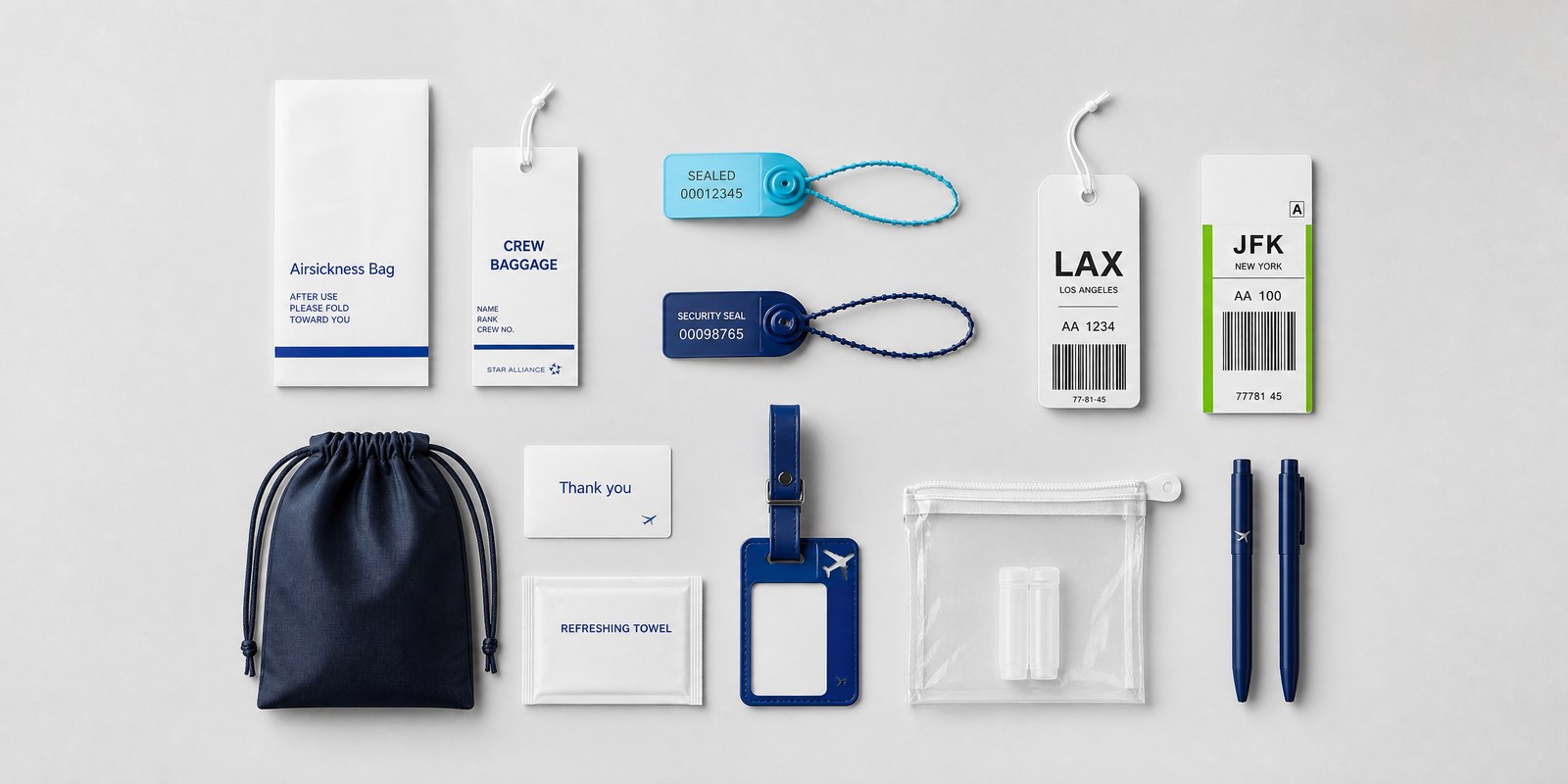
  • Beyond inflight meals, airlines and airports procure a wide range of consumables for cabin service and ground operations. In 2026, procurement teams that consolidate these items under fewer qualified suppliers cut both unit cost and compliance risk — while simplifying audits, warehousing and last-mile logistics. The 2026 cabin and ground supply checklist Use this checklist to structure a single consolidated sourcing plan across the six highest-volume categories in airline and airport operations. Cabin hygiene: individually wrapped wet wipes, refreshing towels, amenity kits and passenger comfort items Foodservice: meal boxes, foil containers, cutlery kits, paper cups, napkins and bread bags Waste management: drawstring garbage bags, airsickness bags and biodegradable waste bags Security and sealing: numbered plastic seals and hang-tab seal tags for catering carts and cargo Documentation: direct thermal boarding passes, baggage tags and printed labels Distribution: paper carry bags and kraft hand bags for duty-free and meal-kit delivery What to specify in the tender Material and structure: state the grammage, barrier requirement and closure type so quotes are directly comparable. Compliance evidence: require food-contact documentation and batch traceability per shipment. Customisation: confirm logo placement, print method and whether airline-specific artwork is needed on seals, tags and bags. Packaging and logistics: agree carton counts, pallet configuration and lead time before pricing is locked. Why consolidation wins Each product category needs certification documentation, batch consistency and reliable delivery. A supplier that covers multiple categories under one quality system simplifies audits, reduces logistics complexity and gives procurement leverage on pricing. Airlines and airport operators increasingly structure tenders to reward exactly this kind of consolidated supply. Bottom line Map your 2026 demand against the six categories above, then qualify two to three suppliers that can cover several of them at once. The savings come less from headline unit price than from fewer SKUs, fewer audits and fewer deliveries. Source: based on airline and airport consumables procurement categories in 2026 practice

    Read More
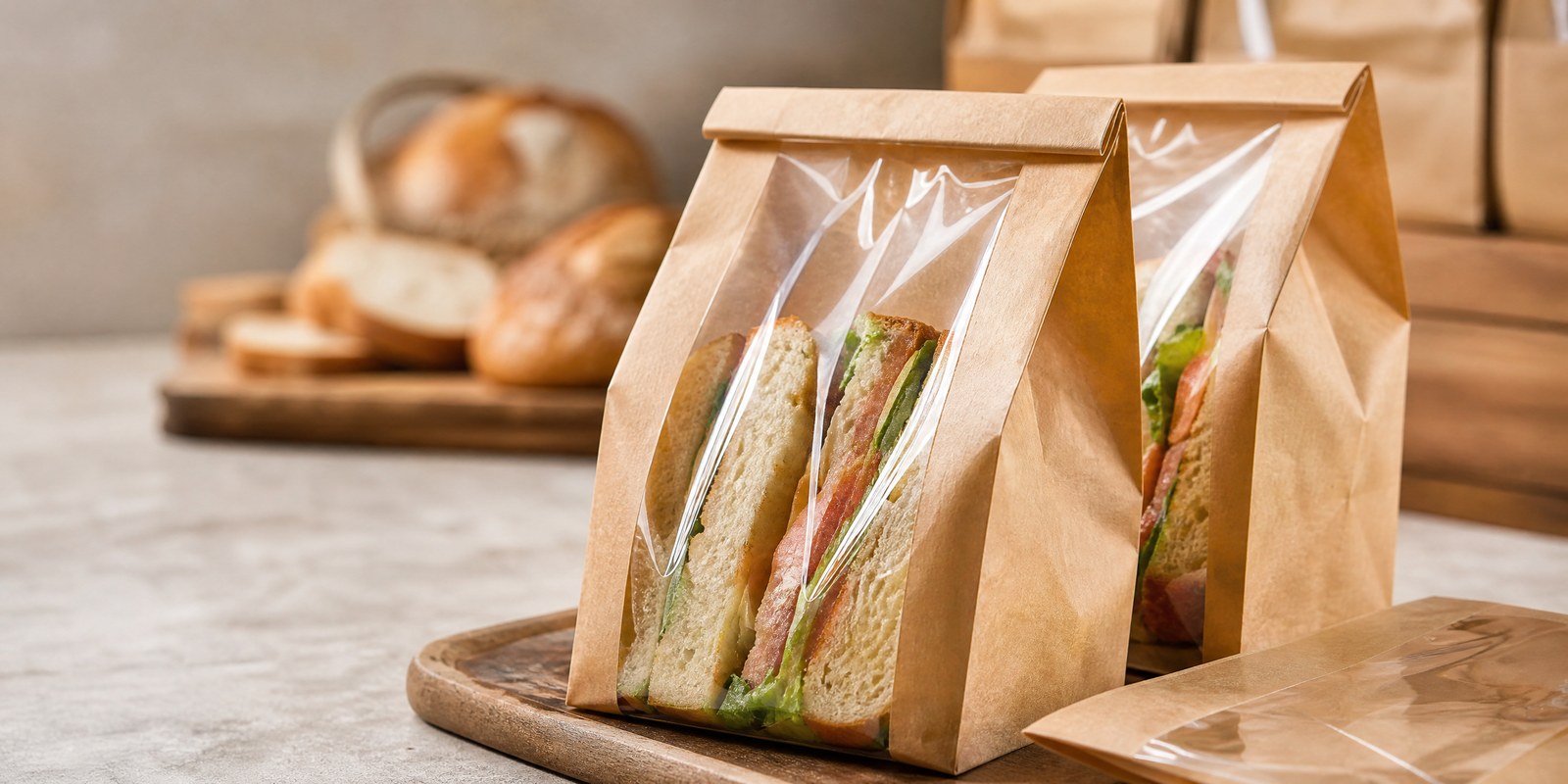
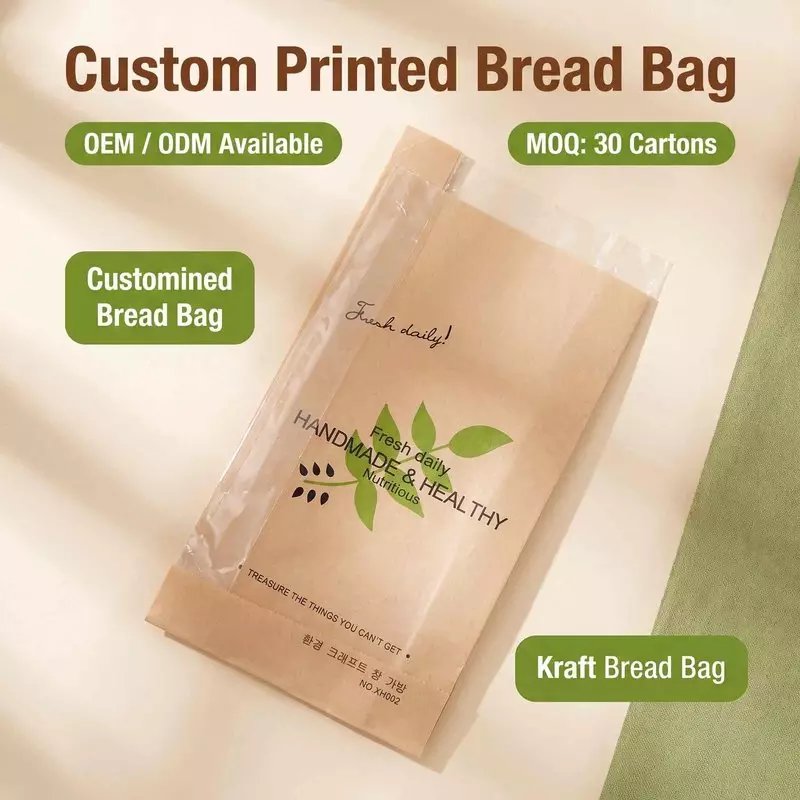
  • Freshly baked goods release oil and moisture — the two enemies of plain paper packaging. In 2026, PE-laminated food paper and coated bread bags have become the standard for bakery, takeaway and inflight snack packaging, because they combine paper’s printability and recyclability story with a genuine functional barrier. Why barrier performance matters Oil resistance: prevents grease soaking through the bag, which weakens the structure, marks the customer’s hands and spoils presentation. Moisture resistance: stops condensation from cooling goods making the paper translucent, soft or soggy. Product visibility: a transparent window shows the product while the paper body carries branding. Food-contact safety: food-grade coatings and films suitable for direct contact with bakery items. Choosing the right barrier PE-coated paper: the workhorse choice for bread bags and takeaway wraps — good oil and moisture resistance, heat-sealable and cost-efficient. Laminated film structures: used where a longer shelf life or a higher grease load is expected, such as hot snack and inflight sandwich packs. Window configuration: a kraft paper body with a PE or PP window keeps the product visible without compromising the barrier. Specification guidance When sourcing bread bags and bakery packaging, confirm four points before ordering: the barrier type (PE-coated paper, laminated film, or both), the grammage and closure method, the window configuration, and the food-contact certification. For inflight snack service, compact formats that fit a tray table while keeping the product fresh through the distribution cycle are the priority. Bottom line Barrier performance is a specification decision, not a price decision. Matching the coating and window to the actual oil and moisture load of the product is what keeps bakery and takeaway packaging presentable from the oven to the customer. Source: based on food packaging material practice for bakery and snack applications

    Read More
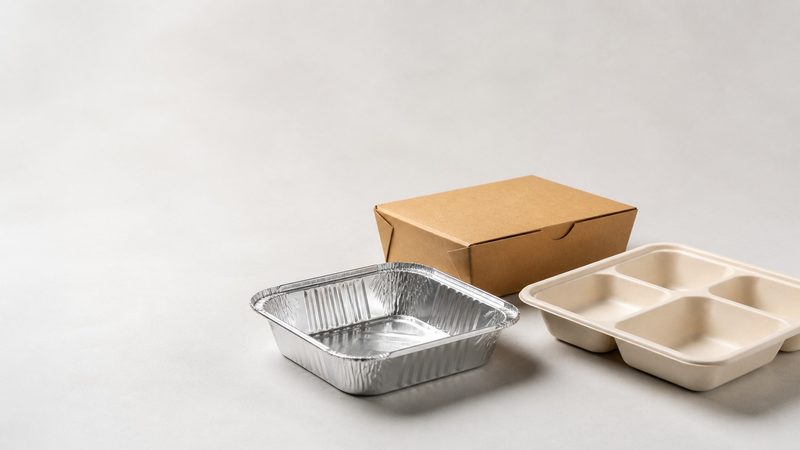
  • Airline meal containers come in three material families - paperboard, aluminium foil and plastic (including biodegradable options) - each with distinct performance for heating, sealing, weight and sustainability. The right choice depends on the meal type, service class and kitchen workflow. Decision guide for catering buyers Paperboard meal boxes: printable, branded, lightweight - the standard for economy meal presentation with custom artwork; food-contact certified Aluminium foil containers: oven-ready, high structural rigidity, infinitely recyclable - for heavy portions and high-heat reheating; heavy-gauge options prevent deformation Plastic / PLA compartment trays: portion-controlled compartments, hinged lids - efficient assembly; biodegradable grades for sustainability programmes Bagasse trays: biodegradable, microwave and freezer safe - for eco-focused service and central kitchen portioning Practical guidance Most 2026 airline programmes combine: paperboard boxes for branded economy meals, foil for large or high-heat portions, compartment trays for multi-component meals and bagasse for sustainability-led routes. Consolidating these formats with one qualified supplier reduces procurement complexity and freight cost per item. Source: based on airline catering packaging practice and 2026 material market conditions

    Read More
  • Most foodservice packaging buyers start with a sample approval, then scale to repeat orders. The difference between a smooth scale-up and a quality problem is the discipline around sample documentation - the approved sample must become a written standard, not a memory. The five-step OEM process that prevents drift 1. Requirement mapping: use scenario, dimensions, material, printing, packing and destination-market compliance confirmed in writing 2. Quotation: specification-based pricing with MOQ, lead time and Incoterms 3. Artwork and sampling: digital proof, then physical sample built to the written specification 4. Sample approval: the approved sample is documented as the acceptance standard 5. Batch production: every batch inspected against the approved sample - not against interpretation What buyers should demand Ask suppliers to document the acceptance standard in writing and to state how batches are inspected against it. Ask how reorders are handled - whether the same standard applies without re-proofing. Suppliers that follow this structure (like Xinghan's OEM workflow) deliver consistency; suppliers that rely on memory deliver variance. Source: based on Xinghan OEM/ODM production workflow (industry-standard sampling and approval methodology)

    Read More
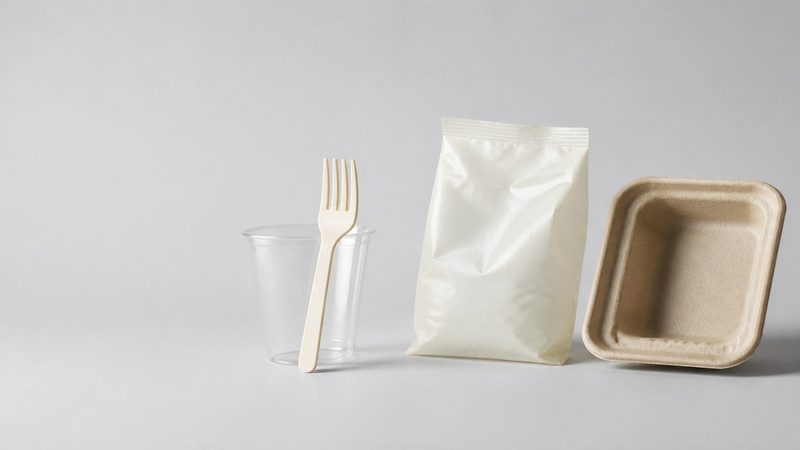
  • Biodegradable food packaging is not one material but a family of materials with different properties, certifications and cost structures. Choosing correctly in 2026 means matching the material to the product, the service temperature and the destination market’s standards. The three workhorses compared PLA (polylactic acid): plant-based, rigid, compostable - best for cutlery, cups and clear films. Temperature-sensitive above 60C; certified compostability under EN 13432 / GB/T 38082 PBAT (butylene adipate-co-terephthalate): flexible and tear-resistant - used in bags and films, usually blended with PLA for balance of strength and cost Bagasse (moulded fibre): made from sugarcane pulp - rigid trays and plates, microwave and freezer safe, fully compostable Buying guidance For cutlery and cups, specify PLA with documented compostability. For carrier bags and self-adhesive packaging, PLA/PBAT blends give the durability daily use requires. For meal trays that must move from freezer through oven to service, bagasse is the practical choice. In every case, verify the certificate matches the destination market’s standard - not just the supplier’s description. Source: based on 2026 market data for PLA and PBAT capacity and pricing (GEP Research); material characteristics per industry certification standards

    Read More
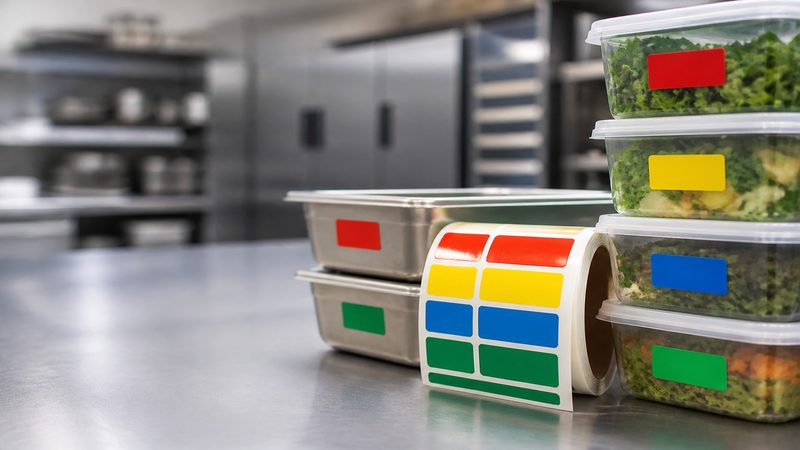
  • Food production traceability is a daily operational problem in airline catering, central kitchens and institutional foodservice: identifying which batch was produced when, by which shift, for which flight or outlet. Colour-coded removable labels are the low-cost solution that kitchens around the world standardise on. How the system works One colour per weekday: staff recognise production dates at a glance without reading text Pre-printed shift slots: 00:00-08:00 / 08:00-16:00 / 16:00-24:00 circled in seconds Blank writing area: handwritten batch codes, lot numbers or flight identifiers Removable adhesive: sticks firmly to containers and trays, peels cleanly with no residue on reusable packaging Why removable adhesive matters In cold-chain and reusable-container workflows, labels that leave residue create hygiene and compliance problems. A removable-adhesive label eliminates that risk while surviving normal chiller and transport handling. For multi-shift operations, the colour system reduces misidentification errors that lead to waste or - worse - compliance findings. Source: based on food-service production control practice (batch labelling methodology)

    Read More
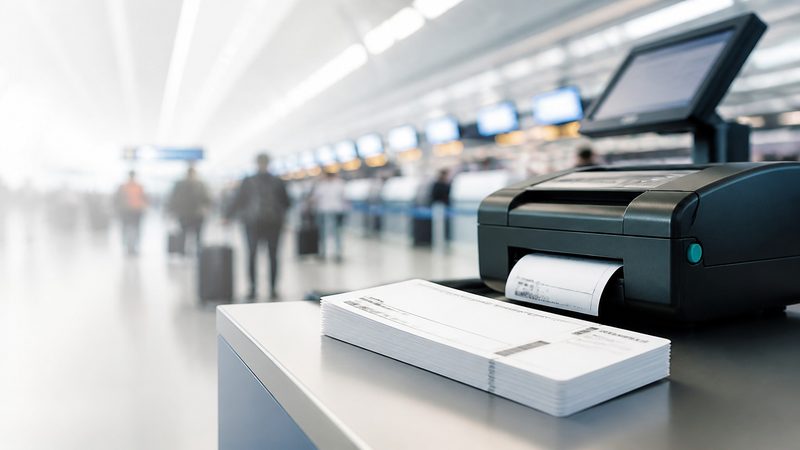
  • Boarding passes remain one of the highest-volume printed items in aviation, printed in real time at check-in counters, kiosks and gates. The material quality of the card stock determines whether thermal printers image reliably, whether barcodes scan at boarding gates, and how much print waste an airport generates. What to specify for boarding pass stock Three-proof thermal coating: resistance to heat, light and friction - the three conditions that degrade thermal images in airport environments GSM matched to use: heavier card (e.g. 190gsm) holds its shape through passenger handling and archiving IATA-standard dimensions: 203.2 x 82.55 mm compatibility with existing printers and readers Perforation: detachable stub for gate agent retention procedures Print readability: consistent thermal imaging across printer models from different manufacturers Cost of poor stock Low-grade thermal paper causes barcode scan failures, faded prints and printer jams - each costing time at the busiest points of passenger flow. Airports and airlines that standardise on quality card stock reduce reprints and accelerate throughput, which is why boarding pass supply is increasingly managed as a certified, specification-controlled category. Source: based on airline operations practice for direct thermal boarding pass materials (industry specifications)

    Read More
1 2 3 4 5

Leave A Message

Leave A Message
If you are interested in our products and want to know more details, please leave a message here, we will reply you as soon as we can.
submit
Contact us:sales@xhanco.com

Home

Products

WhatsApp

contact