Email : sales@xhanco.com
Phone : +8619129236778
The EU Packaging and Packaging Waste Regulation (PPWR) has applied across the European Union since 12 August 2026. For airlines, caterers, foodservice distributors and packaging importers, this changes the procurement conversation: a pack must be evaluated not only for cost and service performance, but also for food-contact safety, material composition, recyclability, documentation and the waste route in the destination market.
The European Commission states that the PPWR creates a harmonised framework covering the full packaging life cycle. Some requirements are phased: the Commission notes that mandatory recycled content for plastic packaging and the requirement that all packaging be recyclable will apply from 2030. Buyers should therefore use current sourcing cycles to collect reliable material data and avoid locking future programmes into poorly documented structures.
Environmental positioning does not replace food-contact compliance. The European Commission confirms that all food-contact materials placed on the EU market must comply with Regulation (EC) No 1935/2004 and be manufactured in accordance with Good Manufacturing Practice under Regulation (EC) No 2023/2006. Depending on the material, additional EU rules or national provisions may also apply.
For procurement teams, this means that terms such as “recyclable”, “biodegradable” or “compostable” should never be accepted as a substitute for a product specification, intended-use statement and supporting test documentation. Time, temperature, food type and contact conditions must reflect the real application.
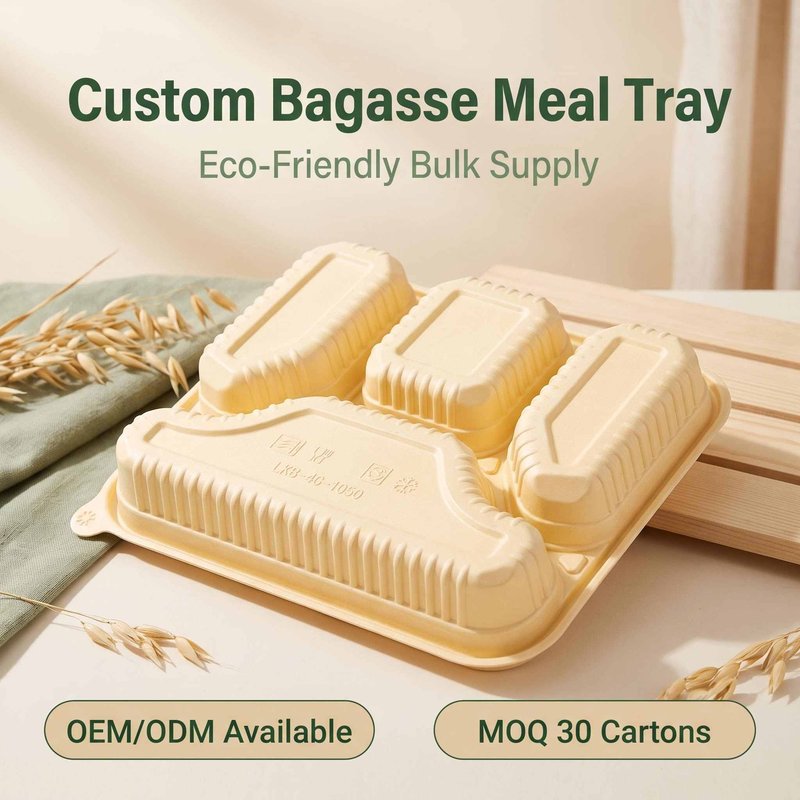
For a four-compartment bagasse meal tray, buyers should verify fibre composition, food-contact suitability, resistance to oil and moisture, performance under microwave or freezer conditions, lid compatibility and the actual end-of-life route available at the destination. A compostability claim alone does not determine whether the complete tray-and-lid system fits a specific waste stream.
For a PLA-coated paper cup, the coating type and weight, cup-board specification, beverage temperature, contact time, printing system and local collection route should be written into the purchasing specification. Buyers should assess the finished cup rather than treating the paperboard and coating as separate sustainability claims.
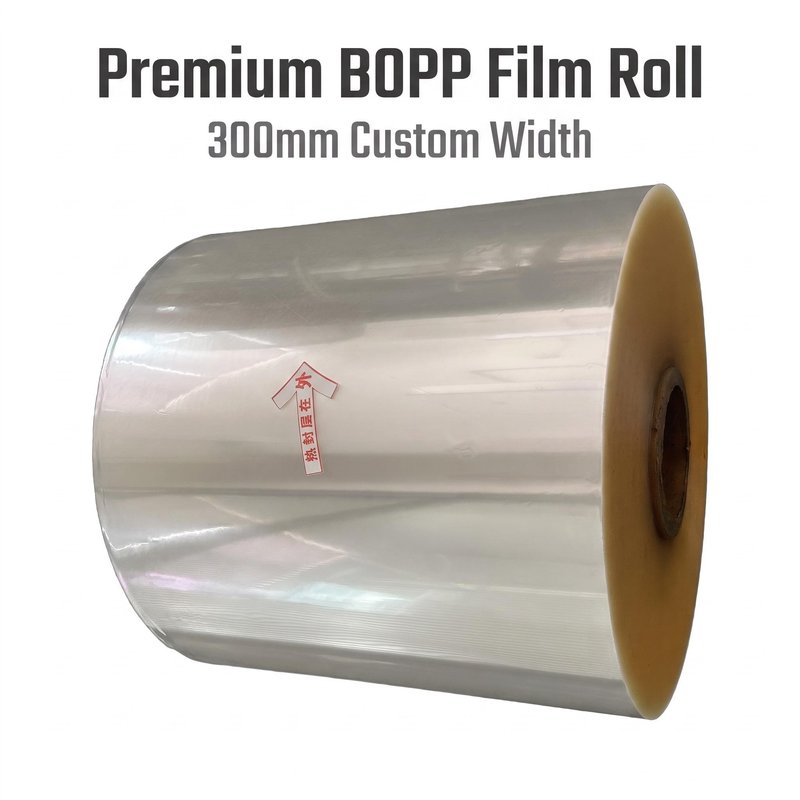
For BOPP heat-seal film and other flexible structures, barrier performance must be balanced with material complexity. Procurement files should identify each layer, ink and adhesive, the sealing conditions, food-contact status and whether the finished structure is compatible with the target recycling system.
The immediate task is not to replace every packaging format with one material. It is to make every specification auditable. Airline-catering buyers should compare candidate packs against four questions: Does it protect the food? Is it supported for the intended contact conditions? Is its complete material structure documented? Does its end-of-life claim match the infrastructure and rules of the destination market?
XHANCO supports OEM/ODM development for airline supplies and foodservice packaging, including material selection, custom dimensions, printing, samples and production quality control. Buyers preparing EU programmes can contact XHANCO with their product application, destination market and documentation requirements for a specification review.
Email :sales@xhanco.com
Email :Sales@xhanaero.com
Tel :+8619129236778
Whatsapp : +8619129236778
4/F, Building E, No. 5 Xinhe South Road, Zengcheng District, Guangzhou, China


Leave A Message
Scan To Wechat :

Scan To WhatsApp :


 Product categories