How to Specify Custom Windowed Bread Bags for Bakery and Inflight Snack Programmes
Sep 27, 2026
A bread bag looks simple until a buyer has to use the same design across a bakery counter, a delivery route and an inflight snack programme. The product may be packed warm, displayed for several hours, handled by multiple teams and then reordered months later. A successful specification has to address more than appearance. It should state what is being packed, how long the bag must perform, which surfaces need a barrier, what the customer should see through the window and how every carton will be checked.
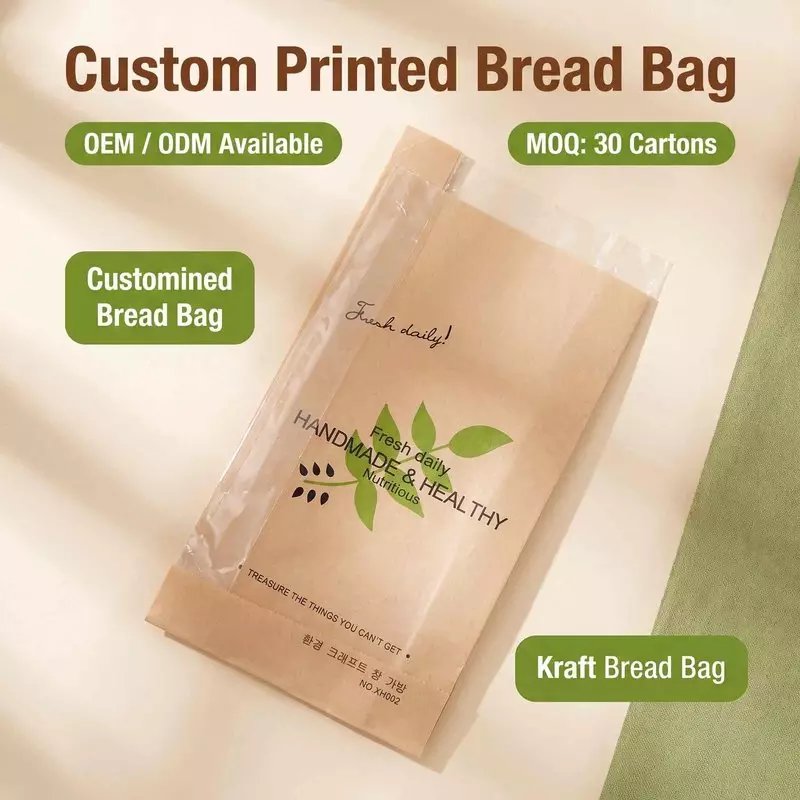
XHANCO's custom printed PE-laminated food paper bread bag offers a useful starting format: 122 × 50 × 230 mm, with a transparent PE window and options for dimensions, paper weight, window design and full-colour printing. The product page lists 4,000 pieces per carton, a minimum order of 30 cartons and a lead time of 15 to 25 days after specification and sample approval. These are catalogue terms for that item; a final quotation should confirm the build and schedule for the buyer's actual order.
Begin with the food and the service route
Tell the supplier whether the bag will hold a dry roll, a buttery pastry, a filled sandwich or a chilled item. Record the typical portion dimensions and weight, the temperature at packing, the expected hold time and whether the item is sold on a shelf, delivered to a customer or loaded into an aircraft galley. Each condition affects material and format choices. A bag that looks adequate around a room-temperature roll may behave differently around a warm, oil-rich pastry.
For a new programme, test the proposed bag with the actual product rather than a paper mock-up alone. Check whether the food enters cleanly, whether the bottom fold supports it, and whether the opening and closure method match the packing line. If the bag is part of an airline snack kit, confirm that it fits the kit and the intended galley or trolley space. Product dimensions should be accepted in millimetres with a stated tolerance, not left to an informal description such as "standard sandwich size."
Choosing a custom printed bakery bread bag with window
PE-laminated paper and a PE film window can help resist oil and surface moisture, but the required construction depends on the food and the packing process. Ask what side is coated, whether the window film is a separate layer and how it is joined to the paper. Request a trial using the longest realistic display or transport period. Look for staining, softening at folds, window lifting and condensation that obscures the product.
Fresh bakery items should be cooled to an appropriate packing condition before the final bag is approved. If the product will be packed while warm, discuss condensation and any ventilation requirement with the supplier. Do not assume that a transparent window guarantees a clear view under every temperature change. The window's size, shape and position should be tested on the filled bag: a large window can improve visibility, while a smaller one may leave more printable area for product information.
Buyers assessing a windowed bakery format should ask for a material specification and a physical sample that both describe the same construction. Terms such as food grade or moisture resistant are too broad without the relevant intended food contact, handling conditions and supporting documents.
Make print approval measurable
Brand artwork needs its own acceptance process. Supply vector files where possible and identify the intended print colours, minimum readable text, barcode placement and any required food information. The digital proof should show the bag flattened and filled, because folds and the window can interrupt a design in ways that a flat layout hides. Approve the location of the logo and mandatory text relative to the bottom gusset and sealing areas.
For a PE-laminated food paper bread bag supplier, repeatability matters as much as the first proof. Keep the signed artwork version, approved colour reference, material build and retained physical sample together. When an order is repeated, the purchase order should refer back to that controlled version. If a printer, film or paper weight changes, agree how the supplier will notify the buyer and whether another sample is needed.
Confirm quantities, packing and lead time
The reference product is listed at 4,000 pieces per carton and an MOQ of 30 cartons, approximately 120,000 pieces. Buyers should verify whether those numbers remain valid after changing the bag size, paper weight or print coverage. A larger bag may alter the carton count; a revised window can affect tooling or setup. Ask for the quoted unit price, carton quantity, gross weight, carton dimensions and number of cartons per shipment on the same document.
Lead time should be counted from a defined approval point. The listed 15 to 25 days begins after specification and sample approval, so artwork revision or delayed sign-off can change the practical delivery date. For seasonal bakery or airline programmes, provide a forecast and planned release dates early. A useful reorder plan identifies the latest date for confirming artwork, the required arrival date and a buffer for inspection and transport.
Set a quality check that matches the risk
Before production, agree what the supplier will inspect and what evidence the buyer will receive. A sensible check may include dimensions, material construction, window bond, print registration, bag cleanliness and carton labels. The inspection method should be proportionate to the order and stated in writing. If the bag is intended for direct food contact, request the relevant test report or declaration for the specific materials and destination market; a broad marketing claim is not a substitute for the documents the buyer requires.
Keep a few approved filled samples for practical comparison. During incoming inspection, compare the delivered cartons with the agreed specification and retained sample. Record any deviation by batch and discuss a correction before the next order. This process helps both parties protect a repeat programme without relying on memory or images alone.
A concise RFQ for the first conversation
When asking for bulk oil-resistant paper bread bags for inflight snacks, send the food dimensions and weight, packing temperature, target bag dimensions, barrier and window requirements, artwork, annual volume, first shipment quantity, destination and required delivery date. State whether the bag is for direct food contact and which compliance documents your market or customer requires. Include photos of the packed food if they are available, but label them as reference images rather than final specifications.
XHANCO can discuss the catalogue bag as a starting point and quote custom dimensions, window configuration and printing through its OEM/ODM process. For a sample and a written proposal based on your use case, send your requirements to the team.
Content contact: Peter, CEOPublisher: XHANCO - Guangdong Xinghan Industrial Co., Ltd.For product specifications, sample planning and company enquiries, contact XHANCO.
Read More