How to Specify Custom Printed Airsickness Bags for Airline Cabin Programmes
Sep 28, 2026
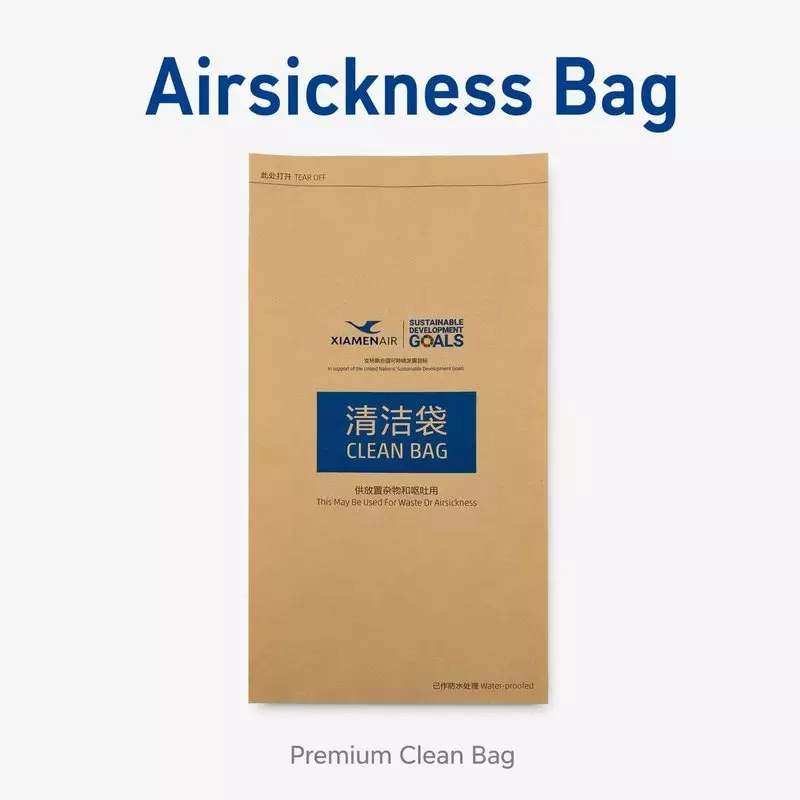
Airsickness bags are simple cabin consumables, but poor specifications can create avoidable problems: leakage, difficult opening, unreadable instructions, excess galley volume and inconsistent branding. A professional sourcing brief should define performance, dimensions, artwork and packing before a supplier prepares samples. Start with the real cabin-use scenario Procurement teams looking for custom printed airsickness bags for airlines should begin with where the bag will be stored and how passengers will use it. Confirm the seat-pocket or service-kit dimensions, required folded size, opening direction, target capacity and disposal method. The bag must be easy to identify, remove and open under time pressure without occupying unnecessary cabin-storage space. For XHANCO item XH-PP-002, the available configuration is a paper-based bag with a waterproof barrier treatment, flat-fold construction and tear-off opening. Size, structure, paper thickness, artwork, inner packing and export carton can be customised after specification review. Specify paper and barrier performance separately “Waterproof paper” is not a complete technical specification. The buyer should state the expected liquid-holding time, approximate fill volume and whether the bag may encounter warm liquids, acidic contents or prolonged storage in humid cabin conditions. Paper basis weight influences stiffness and handling, while the inner barrier supports liquid resistance. Both must be evaluated in the finished converted bag. When assessing a waterproof paper airline sickness bag supplier, ask for a representative sample made with the proposed paper, barrier, seams and bottom construction. A useful approval test can include controlled filling, timed standing, seam inspection and gentle handling. Test criteria should be agreed in writing rather than relying on a vague “leakproof” claim. Control dimensions, opening and folding The RFQ should include open width, finished height, gusset or expansion depth, folded dimensions and allowable tolerances. A bag that meets nominal capacity but is too wide for the seat pocket is not operationally suitable. Likewise, an opening that looks clean in artwork may be difficult to separate when the paper is folded tightly. Ask the sample reviewer to check whether the opening can be found by touch, whether the mouth stays accessible, and whether the filled bag can be closed or folded without immediate spill risk. If a closure strip, wire tie or adhesive feature is required, specify it explicitly because it changes materials, assembly and packing. Design artwork for clarity, not decoration Branding should remain legible after folding. Place the airline logo, product purpose and disposal instructions in areas that are visible in the stored configuration. Confirm print colours with physical proofs or agreed colour references, especially when corporate blues, reds or metallic effects are involved. For international routes, decide whether instructions need multiple languages or pictograms. Text should use sufficient contrast and a practical font size. Avoid putting critical instructions across gussets, fold lines or seam areas. Artwork approval should cover the final dieline, not only a flat visual mock-up. Define packing around cabin operations Unit packing, bundle quantity and carton dimensions affect both warehouse handling and aircraft-service replenishment. Buyers of bulk OEM airsickness bags for cabin service should specify how many bags are needed per inner pack, whether they must be orientated consistently, and whether cartons require lot numbers, barcodes or route-specific labels. Export cartons should protect the bags against crushing and moisture during international transport. At the same time, excessive carton size or unnecessary inner packaging can increase freight and handling cost. A packing trial using the final folded bag helps balance protection and logistics efficiency. Build a sample approval and quality-control plan A practical approval sequence is: confirm the written specification, review the dieline, approve a printed pre-production sample, conduct functional tests, sign the approved sample and retain it as the production reference. XHANCO lists a typical lead time of 15–25 days after specification and sample approval for this product; final timing and MOQ should be confirmed at quotation because artwork, structure and order volume affect production planning. Incoming and production checks can cover paper and barrier identity, dimensions, print registration, colour, seam integrity, opening performance, fold quality, packing count and carton marks. Buyers should also define an acceptable inspection method and how non-conforming lots will be handled. RFQ checklist Open and folded dimensions, capacity and tolerances Paper type, thickness or basis weight, and barrier requirement Opening, gusset, bottom and closure construction Print colours, artwork files, languages and approval method Liquid-holding test condition and acceptance criteria Quantity per inner pack, carton and shipment Lot coding, barcode and carton-mark requirements Destination market, annual forecast and requested delivery schedule Review the custom printed airline airsickness bag product page, then send XHANCO your specification for sample and quotation planning. Content contact: Peter, CEOPublisher: XHANCO - Guangdong Xinghan Industrial Co., Ltd.For product specifications, sample planning and company enquiries, contact XHANCO.
Read More