Email : sales@xhanco.com
Phone : +8619129236778
Printing on the outside of food packaging does not remove migration risk. Buyers of printed meal boxes and snack films should review ink, substrate, stacking and finished-pack evidence together before approving production.
For procurement teams, artwork sign-off often means checking colour, wording and logo placement. Food-contact review asks a different question: can constituents from the printed layer reach the food under the intended manufacturing, storage and use conditions? This application briefing, dated 10 October 2026, focuses on that practical issue. It is not a claim that a new EU printing-ink deadline starts today, nor a declaration that any XHANCO item has passed a particular regulatory assessment.
The Annex to Commission Regulation (EC) No 2023/2006 on good manufacturing practice addresses inks applied to the non-food-contact side. It covers transfer through the substrate and transfer from the printed face to the food-contact face when sheets or reels touch, commonly called set-off. The regulation also addresses handling and storage and states that printed surfaces within this process must not directly contact food. Its general application date was 1 August 2008: these are established obligations, not a future phase-in announced for 2026.
For today's purchasing decision, a later packaging-policy milestone must not be treated as permission to defer existing food-contact controls. This briefing does not identify a new future transition date for the ink-transfer controls discussed here. Separate material-specific rules, amendments and destination-country requirements still need a current review for the actual construction and market.
The Finnish Food Authority's food-contact-materials control guide places packaging safety within the responsibilities of the supply and use chain. It is official enforcement guidance, not an independent product certificate. The practical implication for a buyer is to connect the supplier's information to the finished package and intended food use, rather than treat the words food grade as the entire review.
Printed paper meal boxes. XHANCO's custom-printed airline paper meal box is an existing format for catering programmes. When specifying a printed version, identify which panel faces food after folding, where print and varnish are placed, and how blanks or formed boxes are stacked. A graphics proof cannot show the chemical suitability of the completed board, coating, adhesive and ink combination.
A useful approval question is: does the evidence describe the same board construction, printed side and use conditions as the order? If a programme changes from wrapped snacks to direct contact with warm, oily food, request a fresh application review. Do not infer suitability for the new menu from a successful colour match or an old test on unprinted board.
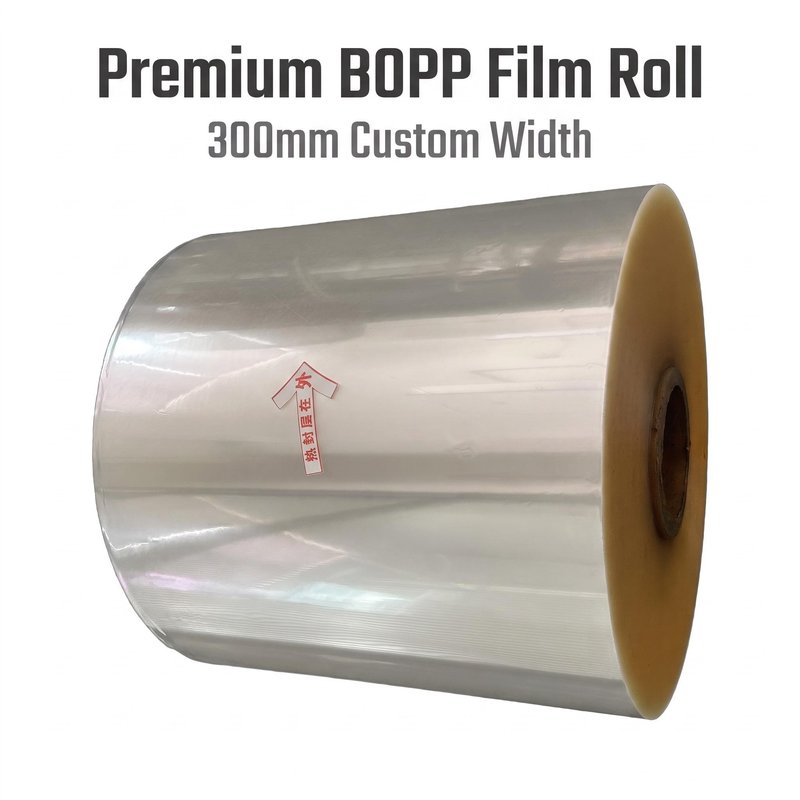
Printed snack films. XHANCO's BOPP heat-seal film roll has a custom-printing option. For a printed proposal, ask the converter to identify the proposed layer structure, food-contact face, print position and winding orientation. Determine whether the delivered reel or subsequent conversion can bring printed and food-contact faces together. A film-to-film snack wrapper is a different application from a tray-lidding construction; do not transfer approvals between them without review.
During sample planning, supply the snack's fat and moisture characteristics, packing and storage conditions, intended shelf life and sealing process. These details help the responsible technical team determine the relevant assessment. They should not be replaced by a request for a generic certificate covering every film and food.
The following is a procurement workflow, not a prescribed laboratory method or a guarantee of compliance:
The EuPIA guideline on inks for food-contact materials, amended May 2023 explains the role of statements of composition, technical data and migration assessment in supply-chain information sharing. It is industry guidance rather than a substitute for law or a certification of a purchased package. Its document structure can help buyers ask more precise questions without demanding that every piece of confidential formulation data appear in a commercial quotation.
When requesting a printed packaging quotation, attach the intended-use brief to the artwork rather than sending the logo alone. Ask the supplier to identify the proposed construction, the documentation available for that construction and the points still requiring confirmation. Record limitations as clearly as the requested appearance. A well-defined review can prevent a late discovery that the approved print layout or material does not match the application.
For a paper-box or snack-film project, contact XHANCO with the food application, destination market, artwork and quantity. Technical suitability and any required evidence should be confirmed for the specific proposal before ordering; this article makes no blanket EU-compliance claim for the company's products.
Cover photograph: China Eastern Snackbox, AcidBomber / Wikimedia Commons / CC BY 3.0. Original 800 × 600-pixel composition retained; JPEG re-encoded without cropping or content alteration. Historical application photograph only, not evidence of XHANCO supply, regulatory compliance or airline endorsement.
Email :sales@xhanco.com
Email :Sales@xhanaero.com
Tel :+8619129236778
Whatsapp : +8619129236778
4/F, Building E, No. 5 Xinhe South Road, Zengcheng District, Guangzhou, China


Leave A Message
Scan To Wechat :
Scan To WhatsApp :


 Product categories