Email : sales@xhanco.com
Phone : +8619129236778
PLA is a plastic polymer, even when its feedstock is plant-based. Compostability does not automatically exempt a product from EU single-use-plastics rules. For airline caterers and foodservice importers, the practical question is not simply whether a material can biodegrade, but whether the particular item can be placed on the destination market, used safely and collected through an accepted waste route.
This procurement briefing, reviewed on 16 October 2026, separates three decisions that are often combined incorrectly: market access, product performance and end-of-life claims. It concerns EU requirements; buyers should also check the implementing rules of the Member State concerned and the circumstances of their supply operation.
The European Commission's explanation of bio-based, biodegradable and compostable plastics distinguishes material origin from disposal behaviour. Bio-based refers to feedstock. Biodegradation depends on environmental conditions. Industrial compostability concerns a controlled treatment route, not automatic breakdown in a garden, street or sea.
The Commission also explains that bio-based and biodegradable plastics remain plastic under the Single-Use Plastics Directive's restrictions. Therefore, substituting PLA for a conventional polymer does not, by itself, remove an item from the legislation. A certificate about disposal behaviour and a decision about permission to sell perform different jobs.
For procurement, treat these as separate approval folders. A material declaration identifies the construction; food-contact evidence addresses the intended use; any compostability evidence addresses a defined finished article and treatment condition. None should be accepted as a universal licence covering the other questions.
Application 1: individually wrapped cutlery. The EU's Your Europe business guidance lists single-use plastic cutlery, including spoons, among prohibited products. A PLA spoon therefore needs a market-access review before an EU-bound programme is approved. A paper wrapper does not change the spoon's material.
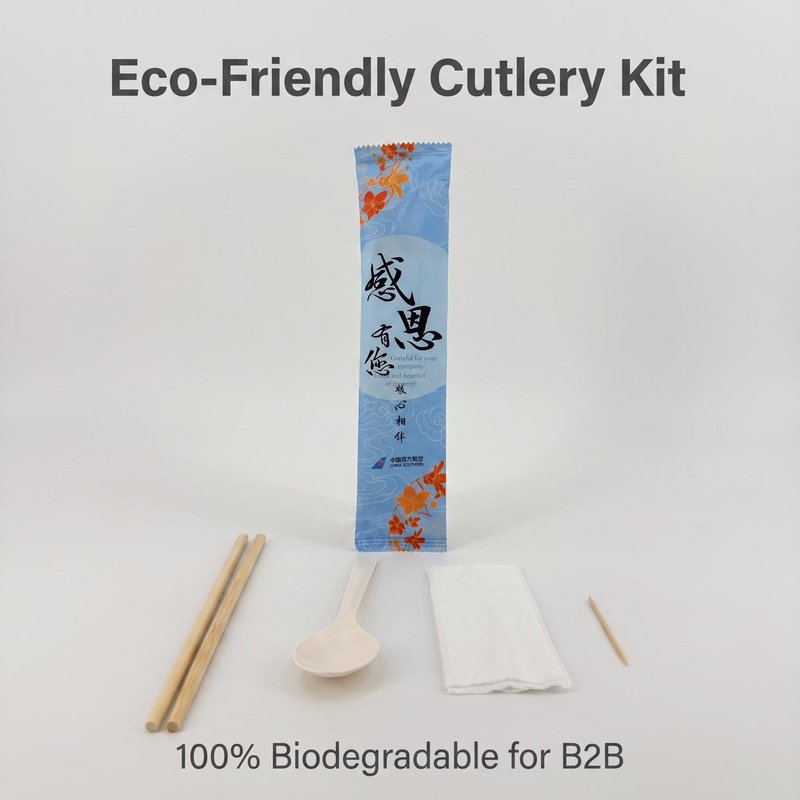
XHANCO's four-piece kit, XH-CK-4PC-200-001, combines bamboo or wood chopsticks, a PLA spoon, a paper napkin and a wooden toothpick. It is an example of why component-by-component review matters: describing the whole kit as plant-based does not answer the legal question about its spoon. This link identifies the construction; it is not a claim that this configuration is authorised for every market.
Application 2: beverage cups. Cups do not all follow the same measure as cutlery. Your Europe identifies beverage cups among products requiring standardised markings. The Commission's product-scope guidance includes paper cups with a bio-based or biodegradable plastic lining. Do not describe a PLA-lined cup as plastic-free merely because most of its mass is paper.
The XHANCO 8 oz PLA-coated cup, XH-FD-001, is a relevant construction to review. Request the complete paper-and-coating specification, applicable marking artwork and destination-specific obligations. Cup, lid and any sleeve should be checked as individual components rather than assigned one blanket environmental description.
Already applicable: the Commission's Single-Use Plastics overview and implementation timeline records 3 July 2021 for market restrictions on specified items and the entry into force of marking requirements. These are not proposed 2027 changes, and a supplier should not present them as optional during a future transition.
Policy, not a blanket approval: the Commission's 2022 policy framework is a non-binding Communication. It supports careful selection and clear claims; it does not create a general exemption for compostable cutlery or guarantee local treatment infrastructure.
Future review: the Commission states that evaluation of the Directive is due to end on 3 July 2027. An evaluation is not itself a new implementation deadline or a suspension of current requirements. Check any subsequently adopted legal text separately before changing an approved purchasing specification.
Buyer takeaway: first establish permission for the product and market; then validate service performance and the waste pathway. Reversing that order can leave a technically attractive material unsuitable for the planned programme.
To discuss a documented configuration, send XHANCO the destination, component list, service conditions and required evidence. Product-specific documentation and available options must be confirmed during specification review; this briefing does not certify any XHANCO item or replace destination-specific legal advice.
Cover photo: Kseniia Poroshkova / Unsplash, used under the Unsplash License. Illustrative public waste-collection scene in France; not a XHANCO facility or evidence that these bins accept PLA.
Email :sales@xhanco.com
Email :Sales@xhanaero.com
Tel :+8619129236778
Whatsapp : +8619129236778
4/F, Building E, No. 5 Xinhe South Road, Zengcheng District, Guangzhou, China


Leave A Message
Scan To Wechat :

Scan To WhatsApp :


 Product categories