Email : sales@xhanco.com
Phone : +8619129236778
For thermal boarding-pass purchasing, “BPA-free” does not establish BPS-free chemistry. Match the declaration and laboratory scope to the exact supplied paper grade.
Thermal boarding passes are often bought under a combination of print-performance requirements and chemical purchasing policies. These are separate questions. A clean barcode does not identify the developer chemistry, and a chemical declaration does not prove that the stock will feed through a kiosk or retain a readable image throughout the journey.
Commission Regulation (EU) 2016/2235 introduced REACH Annex XVII entry 66: thermal paper containing BPA at a concentration equal to or greater than 0.02% by weight must not be placed on the market after 2 January 2020. That application date has already passed. It is not a newly announced 2026 transition deadline.
The numerical threshold is not identical to an unqualified promise of zero BPA. A purchasing specification should distinguish the applicable legal requirement from a buyer's additional requirements and the laboratory's reporting capability. It should also identify the market where the paper will be supplied. This article addresses the cited EU provision, not every national rule or every chemical obligation applicable to an airport procurement programme.
In its June 2020 thermal-paper market update, ECHA reported substitution of BPA with BPS and raised concerns about that substitution. The update is historical evidence of why the two names cannot be treated as interchangeable. Its old market forecasts should not be presented as current 2026 market shares.
If a tender asks for BPA-free, BPS-free or phenol-free stock, request an explicit definition for each term. Do not assume that a BPA declaration covers BPS, that testing two named substances covers every phenolic developer, or that the absence of one substance proves the overall product harmless. A supplier should not be asked to sign a broader statement than the supporting evidence establishes.
A useful document pack identifies the paper manufacturer and grade, the converter's product code, the finished construction and the relevant production lot. A laboratory report should identify its sample, analytes, method, units, results and reporting limits. A result expressed as “not detected” needs its reporting limit; it does not mean that no molecule could be present.
Check whether the report concerns unprinted base stock or the finished, preprinted boarding pass. Static inks, coatings and conversion can change the construction being supplied. Decide with the responsible compliance specialist which sample and evidence are appropriate instead of silently extending a base-paper report to every printed variant.
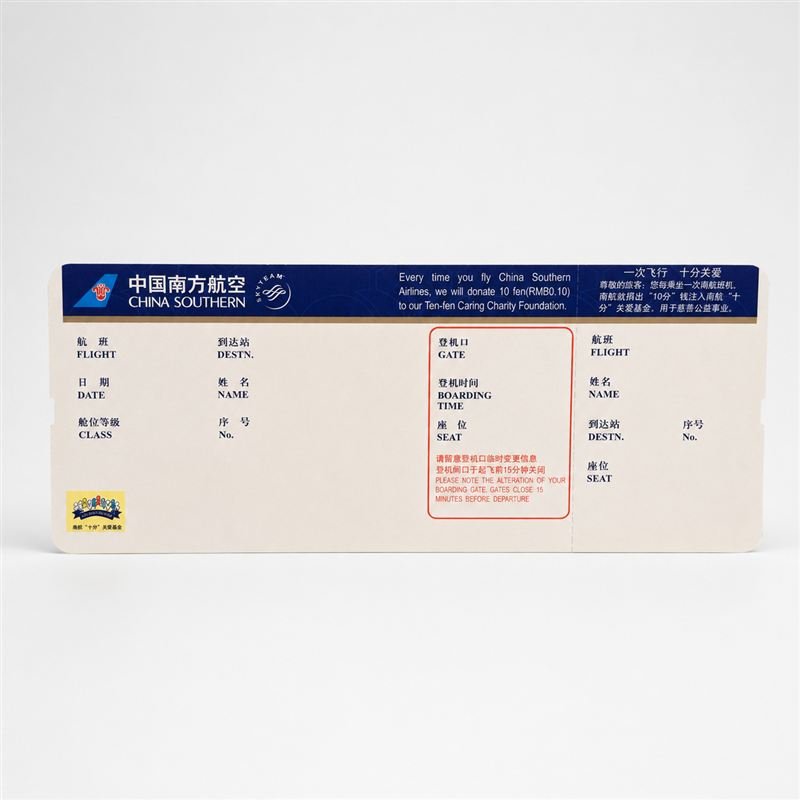
For staffed check-in stock, associate the declaration with the ordered artwork and paper revision. XHANCO's XH-BP-203-190-001 boarding-pass product lists 190 gsm direct thermal card stock. That catalogue description alone does not establish a specific BPA/BPS formulation or a market-specific compliance conclusion.
For self-service kiosk replenishment, prevent an operational substitute from bypassing the chemistry review. If a different paper grade is proposed to address a feed or printing issue, compare both the performance evidence and the substance declaration before release. The existing boarding-pass application page is a useful starting point for discussing format and sample requirements, not a blanket chemical certificate.
A coating trade name, a “three-proof” description and a management-system certificate answer different questions. None should replace the chemical evidence required for the specified product and destination.
The cited BPA restriction is already applicable; this article does not announce an additional universal future ban or phase-in date. Future changes and customer-specific requirements need their own current legal review. XHANCO is not claimed here to hold a particular BPA/BPS test result. Provide your destination, required declaration wording and test scope when requesting a quotation, so document availability can be reviewed for the specified supply.
Cover: historical heat-darkened thermal-paper illustration, by IIVQ - Tijmen Stam, Wikimedia Commons. Photo licensed CC BY-SA 3.0; cropped and resized, with this photo adaptation shared under the same license. Not a recommended qualification test. The illustration cannot identify chemical composition or demonstrate compliance of XHANCO boarding passes.
Email :sales@xhanco.com
Email :Sales@xhanaero.com
Tel :+8619129236778
Whatsapp : +8619129236778
4/F, Building E, No. 5 Xinhe South Road, Zengcheng District, Guangzhou, China


Leave A Message
Scan To Wechat :

Scan To WhatsApp :


 Product categories