Enter product details (such as color, size, materials etc.) and other specific requirements to receive an accurate quote...
Leave A Message
If you are interested in our products and want to know more details, please leave a message here, we will reply you as soon as we can.
submit
Home

Blog

Blog

  • Boarding Pass Stock for Airports: A Procurement and Print-Test Checklist
    Boarding Pass Stock for Airports: A Procurement and Print-Test Checklist
    Oct 09, 2026
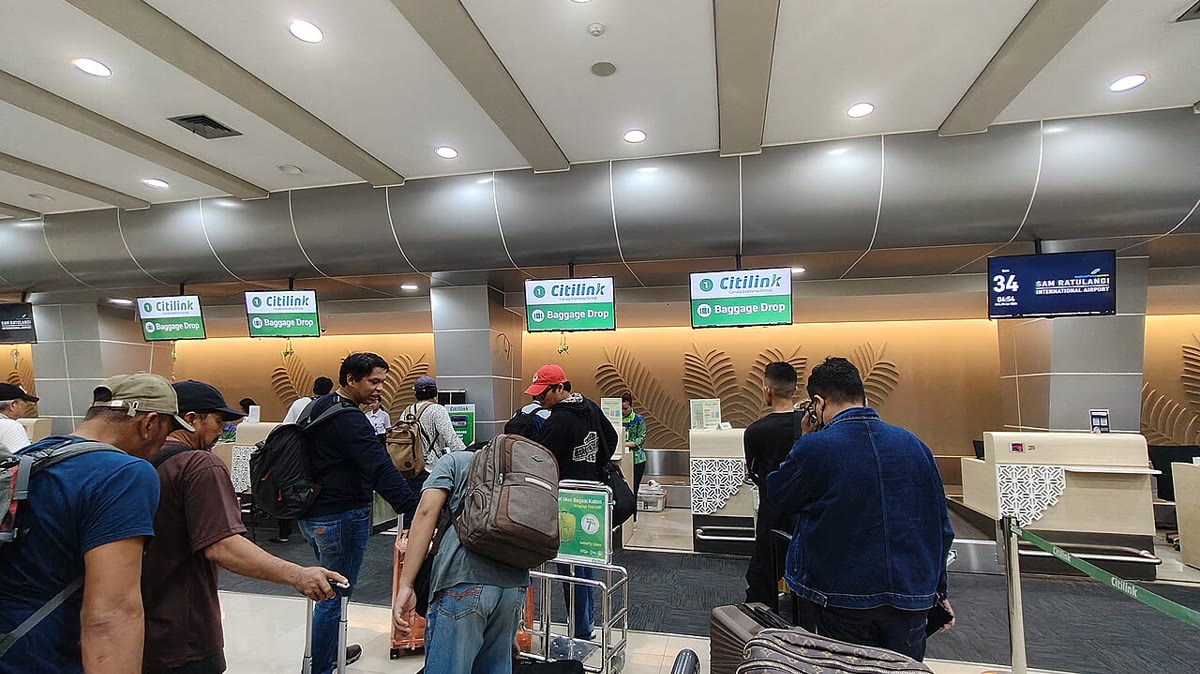
    A boarding pass is a small document with an operationally large job. It must feed through the issuer’s printer, carry readable variable data, withstand handling between check-in and the gate, and scan without slowing a queue. A visually attractive artwork proof cannot establish any of those outcomes. For procurement teams buying custom printed direct thermal airline boarding passes, the useful unit of approval is a tested combination of stock, print layout, printer, scanner and storage conditions. XHANCO’s three-proof direct thermal boarding pass is listed as 190 gsm card stock, 203.2 × 82.55 mm, with a detachable perforated stub and optional black mark. Those are a starting specification, not a guarantee that every airport’s hardware accepts the same format. This guide explains the checks to complete before a production order. Start with the issuing environment, not the artwork Map every place the pass will be printed: staffed counters, self-service kiosks, gate reprint stations and disruption desks. Record each printer model, firmware, feed path, sensor type, print width and media-loading orientation. Then record the scanners used at gates and transfer points. A roll or fanfold format that works in one printer may not fit a different feed path or sensor configuration. Direct thermal printing activates a heat-sensitive coating; it does not use a thermal-transfer ribbon. That makes consumable management simpler, but the printed image can be sensitive to heat, light and abrasion. Zebra’s printing-method guidance distinguishes direct thermal from thermal transfer. Treat the expected journey time and exposure as test conditions, not as assumptions about “three-proof” marketing language. Specify 190 gsm thermal boarding pass stock for airports precisely Basis weight alone cannot predict feeding. Request the agreed card thickness or caliper, stiffness, curl tolerance, coating side, surface finish and dimensional tolerances. The catalogued 190 gsm stock may be suitable for a particular equipment set, but buyer and supplier should validate it on the actual devices. State whether the stock arrives as individual cards, continuous media or another presentation, plus the winding or stacking direction and the number of pieces per box. The XHANCO product page lists a 203.2 × 82.55 mm format. Treat that as the offered product size, not as a universal IATA physical-size requirement. IATA’s common-use and Bar Coded Boarding Pass resources concern data exchange and barcode implementation; a buyer still needs to confirm the physical media dimensions required by its own printers and procedures. Agree the final die line, trim tolerance and safe zones against an engineering drawing. If a gate procedure uses a tear-off stub, define the perforation position, number of ties, tear direction and acceptable tear force. Test both clean separation and card integrity after repeated handling. If the printer uses a black-mark sensor, specify mark size, contrast, location, repeat pitch and whether the mark is on the thermal or reverse side. Never add one simply because it appears on an older sample: it must match the installed sensor. Make barcode readability a release criterion Variable text and the machine-readable symbol must remain legible after pre-printing, overprint varnish and thermal imaging. Supply the actual boarding-pass data layout and printer output to the supplier. Reserve a quiet zone around the code; do not place decorative graphics, folds, perforations or dark ink where the scanner expects contrast. IATA’s BCBP implementation guidance describes boarding-pass barcode data formats, but the operational test is whether the printed pass scans on the buyer’s readers. Run a small, documented trial across all printer models and at least the busiest scanner type. Capture first-pass scan rate, misfeeds, jams, skew, cut or tear defects, print density and legibility. Re-run the trial after realistic handling: pockets, trays, damp hands and the time interval expected between issue and boarding. For any pass that fails, retain the sample and record the device, settings, media lot and failure mode. “Scannable” should become a measurable acceptance rule, not a subjective inspection note. Test the three-proof claim against your own conditions Buyers considering three-proof boarding pass paper for check-in kiosks should ask what “proof” refers to in the offered coating and which test method supports each claim. A sensible trial compares unexposed and exposed cards after light, water droplets, skin oils or friction relevant to the route. Measure barcode readability and text contrast after exposure, not only surface appearance. Do not assume every coating has equal resistance to every solvent, hand sanitizer or prolonged sunlight. Store unopened stock in its original packaging and follow the media maker’s temperature, humidity and light recommendations. Avoid placing cartons beside windows, heat sources or cleaning chemicals. Zebra’s media-storage guidance recommends cool, dry, dark storage. Add a practical first-in, first-out rule and record lot numbers so any later scan problem can be traced. Approve an OEM sample that purchasing can repeat For custom printing, provide the brand artwork, colour references, variable-data safe area, backside content, substrate specification, perforation drawing, sensor-mark drawing and packing configuration in one controlled file set. Ask for a physical sample printed on production-representative stock, not a digital mock-up. Confirm whether the pre-printed inks or coatings interfere with thermal imaging or barcode contrast. The purchase order should identify the approved sample revision and a release checklist: dimensions and caliper, thermal response, artwork and colour, mark registration, perforation, barcode scan result, packing and quantity. Set the sampling frequency and escalation route for a failed lot before production begins. XHANCO’s published product page lists 500 pieces per box, 10 boxes per carton and a 30-carton MOQ; confirm current commercial terms in the quotation because programme-specific packing and quantities can differ. The strongest specification is one the airport can test and the supplier can repeat. Send your printer and scanner models, required format, monthly volume and artwork constraints through XHANCO’s contact page to request a sample and a documented quote. A short pilot before bulk conversion costs less than discovering a scan failure at the boarding gate. Illustrative photograph: check-in counters at Sam Ratulangi International Airport, by Hakuna Zar / Wikimedia Commons, CC BY-SA 4.0. The photograph does not depict XHANCO products or a customer relationship. Content contact: Peter, CEOPublisher: XHANCO - Guangdong Xinghan Industrial Co., Ltd.For product specifications, sample planning and company enquiries, contact XHANCO.  
    Read More

  • How to Specify 300 mm BOPP Heat-Seal Film for Airline Snack Packs
    How to Specify 300 mm BOPP Heat-Seal Film for Airline Snack Packs
    Oct 08, 2026
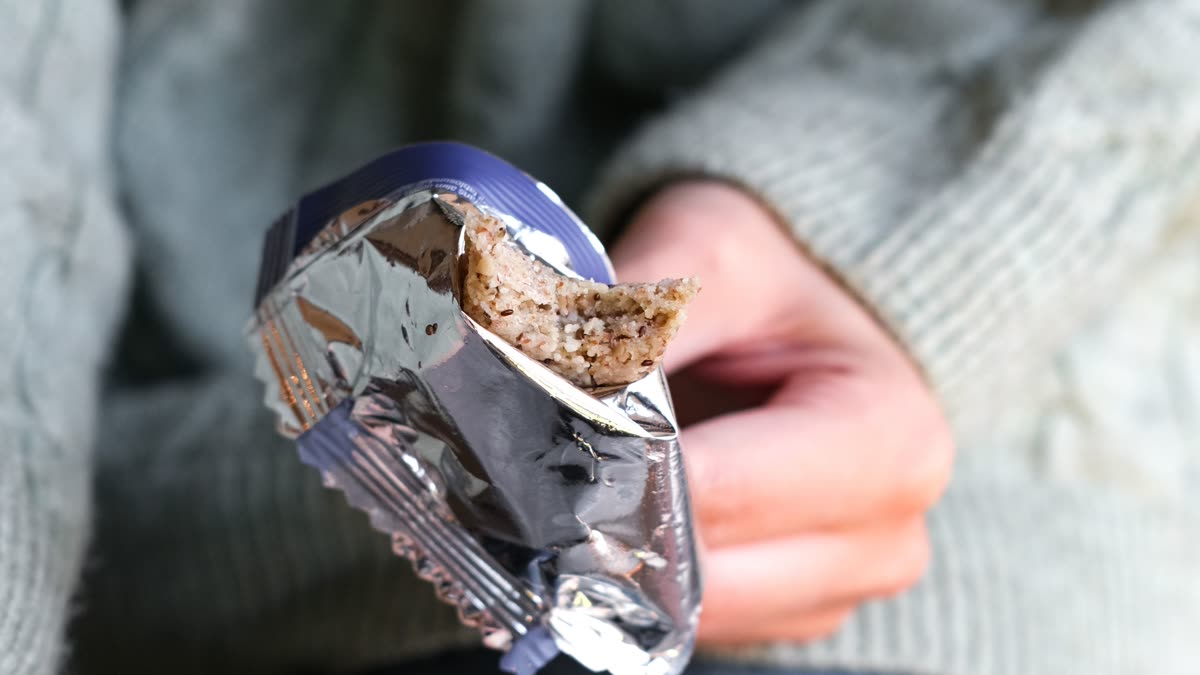
    Buying film by width and thickness alone is a common source of avoidable line-trial failures. A 300 mm BOPP heat-seal film for airline snack packs must work with the product, forming equipment, seal settings, print artwork and the destination market’s food-contact requirements. This guide turns those variables into an approval brief that buyers and converters can test together. Start with the finished pack and the machine Define the snack’s dimensions, shape, target pack length, desired shelf presentation and whether the film will be used on a vertical or horizontal form-fill-seal line. The nominal roll width is not necessarily the usable forming width: lap or fin seals, edge trim and machine geometry consume part of the web. Ask the equipment team for the former or collar dimensions, seal configuration, maximum reel diameter, core size, unwind direction, registration mark position and acceptable winding tension before approving a roll. A 300 mm specification is a starting point for a trial, not a guarantee that every 300 mm web will run on a given line. Compare the machine drawing with a physical sample and confirm where the back seal and end seals land. On small airline snack packs, a few millimetres can change the finished pack’s appearance, usable volume and seal reliability. Define the film structure and food-contact evidence The XHANCO 300 mm BOPP heat-seal film product page describes a BOPP base film, nominal 30-micron thickness and a single-side heat-seal coating. Treat those as product-page specifications to confirm on the actual quotation and sample. A 30-micron food-contact BOPP film roll still needs a complete specification: thickness tolerance, coated side, heat-seal initiation behaviour, coefficient of friction, transparency or haze, printability, and any barrier or shelf-life targets relevant to the food. BOPP describes the oriented polypropylene substrate; it does not, by itself, establish whether the finished printed or coated structure is suitable for a specific food, temperature, contact duration or country. Request the applicable declaration and supporting test documents for the final construction, including coatings, inks and adhesives where used. The European Commission’s food-contact materials legislation overview and the US FDA guidance on determining the regulatory status of food-contact components explain why market and component details matter. They do not certify any particular XHANCO film. Test a usable seal window, not one attractive sample On the production line, record jaw temperature, dwell time, pressure and line speed for each trial. Test seal strength or peel behaviour at the low, middle and high ends of the practical operating window. Inspect the back seal, end seals and folds; check for channels, wrinkles, burn-through, poor registration and seal contamination from crumbs or oils. A pack that seals perfectly at slow trial speed may fail at normal throughput. Agree in advance on a test protocol and acceptance limits. Useful checks include thickness and width measurements across the roll, reel edge quality, seal strength, visual defects, ink rub resistance when printed, barcode readability where applicable, and pack integrity after handling. For airline or catering distribution, simulate the actual filling, packing, transport and service conditions rather than assuming that a generic laboratory result predicts performance. Record the product, machine, operator, settings and sample lot so that a successful run can be repeated. Prepare OEM/ODM artwork and conversion details early If brand printing is required, send a dieline, colour references, artwork files, legal text, barcode position and intended print orientation before cylinders or plates are approved. Confirm whether printing changes the film structure, lead time or food-contact documentation. A custom-width BOPP film for flow-wrap machines may also need a specified roll length, core diameter, winding direction and splice policy. These are production inputs, not cosmetic details. For multi-airline or multi-market programmes, use version control for artwork and claims. Keep the approved sample, signed specification and latest packaging files together. If the food formula, filling process, coating, ink set or destination market changes, reassess the packaging rather than relying on the previous approval. Storage and transport can be part of the approval protocol too. Before committing to repeat orders, ask how rolls are wrapped, labelled and protected from dust, heat and mechanical damage. Define an agreed storage range, stock-rotation method and maximum time between conversion and packing where relevant. When a complaint occurs, the reel label and batch record should identify the film lot, coating or print revision and dispatch date. This traceability allows both sides to isolate a problem without rejecting unaffected stock. The purchase specification should state which measurements are checked on every lot and which tests are repeated only after a material or process change. Buyer–factory approval checklist Share the product dimensions, fill weight, pack drawing and target shelf-life or protection needs. Provide the exact packaging-line model, former dimensions, seal style, line speed and reel constraints. Agree on nominal width, gauge and tolerances; confirm the coated side and winding direction. Define print artwork, registration marks, colour targets and barcode verification. Request the food-contact documentation relevant to the finished structure and destination market. Run a line trial across an agreed temperature, dwell and speed range. Record seal-integrity, visual-quality and handling-test results against written acceptance criteria. Approve a retained sample and revision-controlled specification before volume ordering. Discuss the specification with XHANCO Use the existing 300 mm BOPP heat-seal film listing as a reference, then send the equipment drawing, intended food, target market and required reel configuration through the XHANCO contact page. Ask for the available sample, technical data and supporting documents for the proposed construction. Final suitability should be established through the buyer’s own application and compliance review, followed by a documented line trial. Cover photograph: an illustrative real-life wrapped snack by Esra Afşar / Pexels. The wrapper’s film composition is unverified; this is not an XHANCO product photograph. Content contact: Peter, CEOPublisher: XHANCO - Guangdong Xinghan Industrial Co., Ltd.For product specifications, sample planning and company enquiries, contact XHANCO.  
    Read More
  • How to Specify Custom Printed Airsickness Bags for Airline Cabin Programmes
    How to Specify Custom Printed Airsickness Bags for Airline Cabin Programmes
    Sep 28, 2026
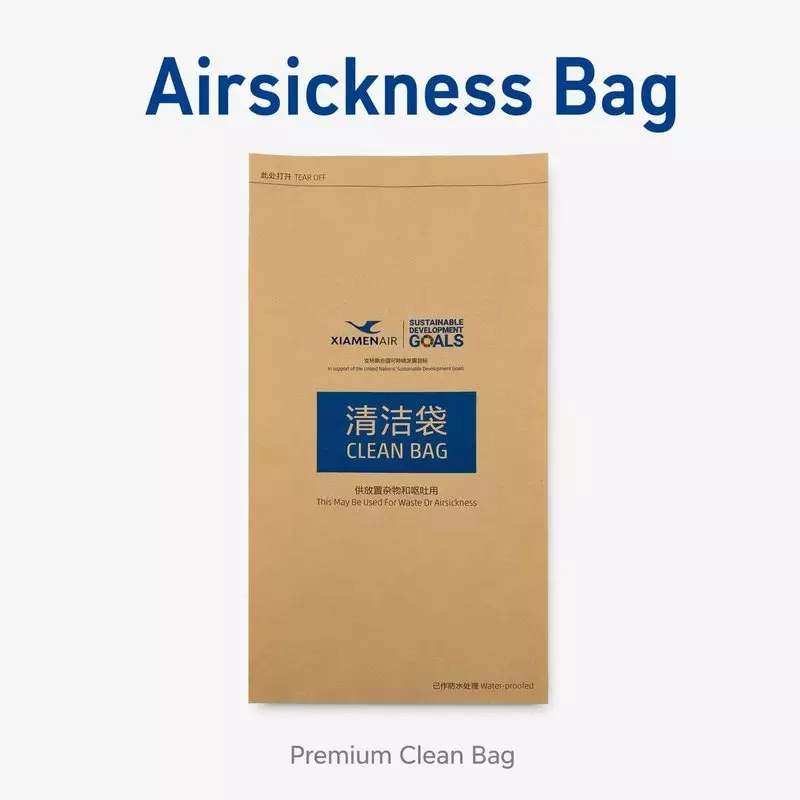
    Airsickness bags are simple cabin consumables, but poor specifications can create avoidable problems: leakage, difficult opening, unreadable instructions, excess galley volume and inconsistent branding. A professional sourcing brief should define performance, dimensions, artwork and packing before a supplier prepares samples. Start with the real cabin-use scenario Procurement teams looking for custom printed airsickness bags for airlines should begin with where the bag will be stored and how passengers will use it. Confirm the seat-pocket or service-kit dimensions, required folded size, opening direction, target capacity and disposal method. The bag must be easy to identify, remove and open under time pressure without occupying unnecessary cabin-storage space. For XHANCO item XH-PP-002, the available configuration is a paper-based bag with a waterproof barrier treatment, flat-fold construction and tear-off opening. Size, structure, paper thickness, artwork, inner packing and export carton can be customised after specification review. Specify paper and barrier performance separately “Waterproof paper” is not a complete technical specification. The buyer should state the expected liquid-holding time, approximate fill volume and whether the bag may encounter warm liquids, acidic contents or prolonged storage in humid cabin conditions. Paper basis weight influences stiffness and handling, while the inner barrier supports liquid resistance. Both must be evaluated in the finished converted bag. When assessing a waterproof paper airline sickness bag supplier, ask for a representative sample made with the proposed paper, barrier, seams and bottom construction. A useful approval test can include controlled filling, timed standing, seam inspection and gentle handling. Test criteria should be agreed in writing rather than relying on a vague “leakproof” claim. Control dimensions, opening and folding The RFQ should include open width, finished height, gusset or expansion depth, folded dimensions and allowable tolerances. A bag that meets nominal capacity but is too wide for the seat pocket is not operationally suitable. Likewise, an opening that looks clean in artwork may be difficult to separate when the paper is folded tightly. Ask the sample reviewer to check whether the opening can be found by touch, whether the mouth stays accessible, and whether the filled bag can be closed or folded without immediate spill risk. If a closure strip, wire tie or adhesive feature is required, specify it explicitly because it changes materials, assembly and packing. Design artwork for clarity, not decoration Branding should remain legible after folding. Place the airline logo, product purpose and disposal instructions in areas that are visible in the stored configuration. Confirm print colours with physical proofs or agreed colour references, especially when corporate blues, reds or metallic effects are involved. For international routes, decide whether instructions need multiple languages or pictograms. Text should use sufficient contrast and a practical font size. Avoid putting critical instructions across gussets, fold lines or seam areas. Artwork approval should cover the final dieline, not only a flat visual mock-up. Define packing around cabin operations Unit packing, bundle quantity and carton dimensions affect both warehouse handling and aircraft-service replenishment. Buyers of bulk OEM airsickness bags for cabin service should specify how many bags are needed per inner pack, whether they must be orientated consistently, and whether cartons require lot numbers, barcodes or route-specific labels. Export cartons should protect the bags against crushing and moisture during international transport. At the same time, excessive carton size or unnecessary inner packaging can increase freight and handling cost. A packing trial using the final folded bag helps balance protection and logistics efficiency. Build a sample approval and quality-control plan A practical approval sequence is: confirm the written specification, review the dieline, approve a printed pre-production sample, conduct functional tests, sign the approved sample and retain it as the production reference. XHANCO lists a typical lead time of 15–25 days after specification and sample approval for this product; final timing and MOQ should be confirmed at quotation because artwork, structure and order volume affect production planning. Incoming and production checks can cover paper and barrier identity, dimensions, print registration, colour, seam integrity, opening performance, fold quality, packing count and carton marks. Buyers should also define an acceptable inspection method and how non-conforming lots will be handled. RFQ checklist Open and folded dimensions, capacity and tolerances Paper type, thickness or basis weight, and barrier requirement Opening, gusset, bottom and closure construction Print colours, artwork files, languages and approval method Liquid-holding test condition and acceptance criteria Quantity per inner pack, carton and shipment Lot coding, barcode and carton-mark requirements Destination market, annual forecast and requested delivery schedule Review the custom printed airline airsickness bag product page, then send XHANCO your specification for sample and quotation planning. Content contact: Peter, CEOPublisher: XHANCO - Guangdong Xinghan Industrial Co., Ltd.For product specifications, sample planning and company enquiries, contact XHANCO.  
    Read More
  • How to Specify Custom Windowed Bread Bags for Bakery and Inflight Snack Programmes
    How to Specify Custom Windowed Bread Bags for Bakery and Inflight Snack Programmes
    Sep 27, 2026
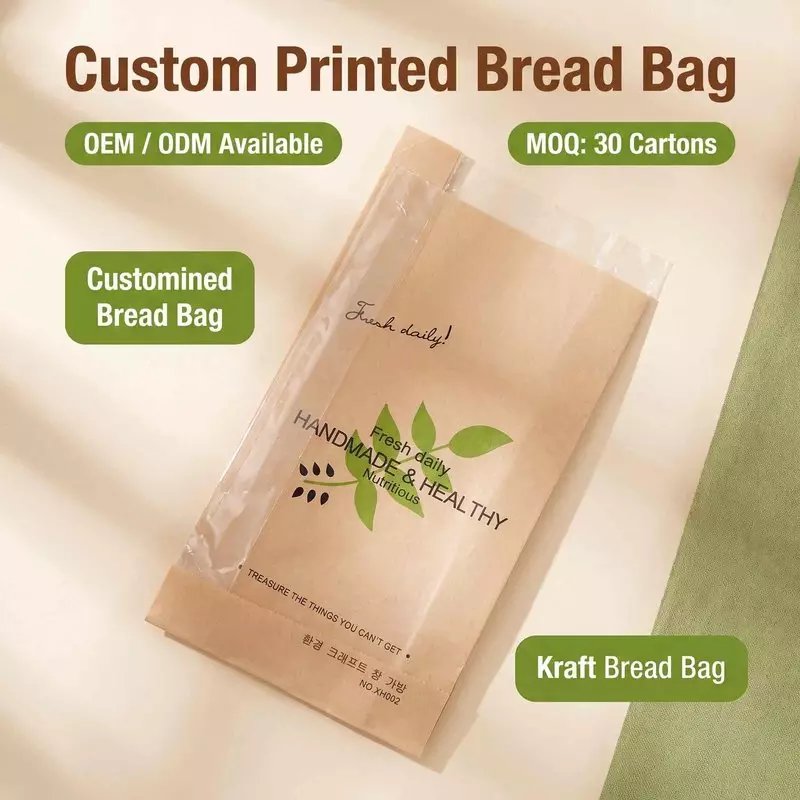
    A bread bag looks simple until a buyer has to use the same design across a bakery counter, a delivery route and an inflight snack programme. The product may be packed warm, displayed for several hours, handled by multiple teams and then reordered months later. A successful specification has to address more than appearance. It should state what is being packed, how long the bag must perform, which surfaces need a barrier, what the customer should see through the window and how every carton will be checked. XHANCO's custom printed PE-laminated food paper bread bag offers a useful starting format: 122 × 50 × 230 mm, with a transparent PE window and options for dimensions, paper weight, window design and full-colour printing. The product page lists 4,000 pieces per carton, a minimum order of 30 cartons and a lead time of 15 to 25 days after specification and sample approval. These are catalogue terms for that item; a final quotation should confirm the build and schedule for the buyer's actual order. Begin with the food and the service route Tell the supplier whether the bag will hold a dry roll, a buttery pastry, a filled sandwich or a chilled item. Record the typical portion dimensions and weight, the temperature at packing, the expected hold time and whether the item is sold on a shelf, delivered to a customer or loaded into an aircraft galley. Each condition affects material and format choices. A bag that looks adequate around a room-temperature roll may behave differently around a warm, oil-rich pastry. For a new programme, test the proposed bag with the actual product rather than a paper mock-up alone. Check whether the food enters cleanly, whether the bottom fold supports it, and whether the opening and closure method match the packing line. If the bag is part of an airline snack kit, confirm that it fits the kit and the intended galley or trolley space. Product dimensions should be accepted in millimetres with a stated tolerance, not left to an informal description such as "standard sandwich size." Choosing a custom printed bakery bread bag with window PE-laminated paper and a PE film window can help resist oil and surface moisture, but the required construction depends on the food and the packing process. Ask what side is coated, whether the window film is a separate layer and how it is joined to the paper. Request a trial using the longest realistic display or transport period. Look for staining, softening at folds, window lifting and condensation that obscures the product. Fresh bakery items should be cooled to an appropriate packing condition before the final bag is approved. If the product will be packed while warm, discuss condensation and any ventilation requirement with the supplier. Do not assume that a transparent window guarantees a clear view under every temperature change. The window's size, shape and position should be tested on the filled bag: a large window can improve visibility, while a smaller one may leave more printable area for product information. Buyers assessing a windowed bakery format should ask for a material specification and a physical sample that both describe the same construction. Terms such as food grade or moisture resistant are too broad without the relevant intended food contact, handling conditions and supporting documents. Make print approval measurable Brand artwork needs its own acceptance process. Supply vector files where possible and identify the intended print colours, minimum readable text, barcode placement and any required food information. The digital proof should show the bag flattened and filled, because folds and the window can interrupt a design in ways that a flat layout hides. Approve the location of the logo and mandatory text relative to the bottom gusset and sealing areas. For a PE-laminated food paper bread bag supplier, repeatability matters as much as the first proof. Keep the signed artwork version, approved colour reference, material build and retained physical sample together. When an order is repeated, the purchase order should refer back to that controlled version. If a printer, film or paper weight changes, agree how the supplier will notify the buyer and whether another sample is needed. Confirm quantities, packing and lead time The reference product is listed at 4,000 pieces per carton and an MOQ of 30 cartons, approximately 120,000 pieces. Buyers should verify whether those numbers remain valid after changing the bag size, paper weight or print coverage. A larger bag may alter the carton count; a revised window can affect tooling or setup. Ask for the quoted unit price, carton quantity, gross weight, carton dimensions and number of cartons per shipment on the same document. Lead time should be counted from a defined approval point. The listed 15 to 25 days begins after specification and sample approval, so artwork revision or delayed sign-off can change the practical delivery date. For seasonal bakery or airline programmes, provide a forecast and planned release dates early. A useful reorder plan identifies the latest date for confirming artwork, the required arrival date and a buffer for inspection and transport. Set a quality check that matches the risk Before production, agree what the supplier will inspect and what evidence the buyer will receive. A sensible check may include dimensions, material construction, window bond, print registration, bag cleanliness and carton labels. The inspection method should be proportionate to the order and stated in writing. If the bag is intended for direct food contact, request the relevant test report or declaration for the specific materials and destination market; a broad marketing claim is not a substitute for the documents the buyer requires. Keep a few approved filled samples for practical comparison. During incoming inspection, compare the delivered cartons with the agreed specification and retained sample. Record any deviation by batch and discuss a correction before the next order. This process helps both parties protect a repeat programme without relying on memory or images alone. A concise RFQ for the first conversation When asking for bulk oil-resistant paper bread bags for inflight snacks, send the food dimensions and weight, packing temperature, target bag dimensions, barrier and window requirements, artwork, annual volume, first shipment quantity, destination and required delivery date. State whether the bag is for direct food contact and which compliance documents your market or customer requires. Include photos of the packed food if they are available, but label them as reference images rather than final specifications. XHANCO can discuss the catalogue bag as a starting point and quote custom dimensions, window configuration and printing through its OEM/ODM process. For a sample and a written proposal based on your use case, send your requirements to the team. Content contact: Peter, CEOPublisher: XHANCO - Guangdong Xinghan Industrial Co., Ltd.For product specifications, sample planning and company enquiries, contact XHANCO.
    Read More
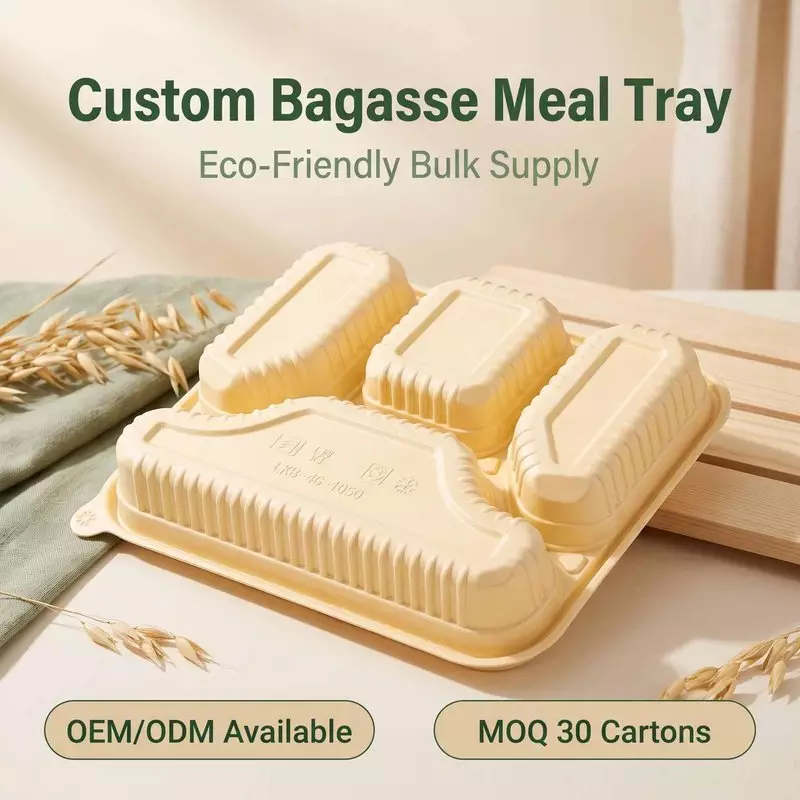
  • How to Specify Custom Bagasse Meal Trays for Airline Catering
    How to Specify Custom Bagasse Meal Trays for Airline Catering
    Sep 24, 2026
    Airline catering packaging has to do more than hold a meal. Buyers need a tray that fits the service configuration, separates menu components, performs reliably during reheating or cold storage, and arrives with stable specifications across repeat orders. For programmes comparing custom bagasse meal trays for airline catering, the purchasing brief should begin with the actual meal, equipment and service workflow rather than a catalogue image alone. Define the tray around the service configuration Start with external dimensions, compartment count and portion layout. XHANCO's four-compartment tray measures 220 × 190 × 40 mm, giving buyers a practical reference for separating a main dish and side items. Confirm the usable volume of every compartment, the required lid fit, stacking height and whether the tray must work with existing service carts or secondary packaging. A qualified four compartment biodegradable meal tray supplier should review these details before sample approval. Match material performance to actual use Moulded sugarcane bagasse fibre is designed for food-contact applications and offers a compostable alternative to conventional plastic trays. Procurement teams should still validate performance against their own conditions, including food temperature, oil and moisture exposure, microwave use, freezer storage and the expected holding time before service. Product claims should be supported by specifications and relevant test documentation for the intended market. Build customization into the specification For bulk sugarcane bagasse food containers, customization can include tray dimensions, compartment layout, fibre colour, embossing, lid matching and carton packing. Put these variables into one written specification and approve a physical sample before mass production. This reduces ambiguity between artwork, tooling, quality control and packing teams and helps keep repeat orders consistent. Plan MOQ, sampling and delivery together XHANCO's referenced four-compartment tray is available with an MOQ of 30 cartons and an indicative lead time of 15–25 days after specification and sample approval. Final timing depends on customization, order quantity and production planning, so buyers should share their required delivery date, destination port and forecast volume early. A clear approval sequence—specification, sample, packaging confirmation and production—creates a more dependable sourcing programme. Prepare a procurement-ready enquiry For an accurate quotation, provide the target dimensions, compartment arrangement, food type, temperature conditions, lid requirement, branding or embossing needs, carton quantity and delivery destination. Review the four-compartment bagasse meal tray or contact XHANCO to discuss samples, OEM/ODM options and production planning. Content contact: Peter, CEOPublisher: XHANCO - Guangdong Xinghan Industrial Co., Ltd.For product specifications, sample planning and company enquiries, contact XHANCO.  
    Read More
  • How to Choose Airline Catering Packaging: Aluminum Foil, PLA/PBAT, or Paper?
    Aug 11, 2026
    Airline catering packaging has to do more than hold food. It must protect meals during preparation, transport, loading, onboard service, and waste collection, while also meeting the airline’s requirements for hygiene, appearance, storage efficiency, and sustainability.   For airline caterers, food service companies, procurement managers, and distributors, the right packaging material depends heavily on the meal type and operating conditions. Aluminum foil containers, paper-based boxes, and PLA/PBAT packaging each have different strengths. Choosing the lowest-cost option without considering the complete catering process can create problems with leakage, heat resistance, stacking, or waste handling.   This guide compares the main options and explains what buyers should check before placing a bulk order.   Why Airline Catering Packaging Requires Different Standards Airline meals move through several stages before reaching passengers. Food is prepared at a catering facility, portioned into containers, stored, transported to the airport, loaded onto aircraft, heated or served, and finally collected as cabin waste.   This means packaging performance cannot be judged only by how the product looks when it leaves the factory. The package needs to remain functional throughout the entire catering process. Procurement Factor Why It Matters Typical Question Temperature resistance Meals may be hot, chilled, reheated, or frozen Can the container handle the intended temperature? Leak resistance Sauces and liquids can damage other meal components Does the package remain secure during handling? Stackability Galley and catering carts have limited space Can multiple units be stacked efficiently? Weight Packaging contributes to catering logistics Can packaging weight be reduced without losing performance? Waste management Cabin waste must be collected and processed efficiently What happens to the package after the meal is served? Customization Packaging can support airline and catering brand presentation Can logos, dimensions, printing, and materials be customized?   Aluminum Foil Containers: A Practical Choice for Hot Meals Aluminum foil remains a practical option for many hot-meal applications because it combines low weight with good heat resistance and a rigid structure. It is particularly useful when meals need to be prepared in advance, transported, reheated, and served without transferring food into another container.   For multi-component meals, Three Compartment Aluminum Foil Meal Containers can separate meat, vegetables, rice, or other meal components. This helps reduce mixing between different foods and can improve meal presentation when the container is opened.   The rolled rim is another detail worth checking during procurement. A properly formed rim improves handling and reduces exposed sharp edges. Buyers should also examine foil thickness consistency, dimensional accuracy, compartment geometry, surface quality, and lid compatibility. Aluminum Foil Feature Procurement Benefit Lightweight construction Helps control unnecessary packaging weight Heat resistance Suitable for many hot-food applications Rigid structure Helps protect food during handling Multiple compartments Separates different meal components Custom dimensions Allows better fit with catering portions   Paper Meal Boxes: When Branding and Presentation Matter Paper-based meal boxes are often selected when visual presentation and branding are important. Printed paper packaging provides a larger surface for airline logos, meal information, promotional graphics, and premium visual design.   For premium cabin services, Custom Printed Airline Meal Boxes can be designed around the airline’s service concept. A business-class meal box, for example, may require a different structure and printing finish from an economy meal package.   However, buyers should not judge paper packaging only by appearance. The board grade, coating, grease resistance, moisture resistance, folding structure, adhesive quality, and printing process all influence actual performance.   A supplier should be able to provide samples for testing with the actual meal. Testing the empty box is not enough. Sauce, oil, steam, condensation, and heat can change packaging performance considerably.   PLA/PBAT Bags: Where Biodegradable Packaging Fits PLA and PBAT are used in biodegradable and compostable packaging applications. PLA can contribute rigidity and strength, while PBAT is commonly used to improve flexibility in film formulations.   For airline catering and food-service operations, PLA PBAT Biodegradable T-Shirt Bags can be considered for carrying meal accessories, takeaway items, or other lightweight packaging applications where a flexible bag is more suitable than a rigid container.   One important point is that “biodegradable” does not automatically mean the same end-of-life pathway in every market. Buyers should ask for the exact material composition, compostability certification, applicable testing standard, and recommended disposal conditions before using sustainability claims on packaging. Material Main Strength Potential Limitation Suitable Application Aluminum foil Heat resistance and rigidity Less suitable where a paper-based appearance is required Hot meals and compartment meals Paper Printing and presentation Requires suitable barrier treatment Premium meal boxes and branded catering PLA/PBAT Flexible biodegradable packaging options End-of-life conditions and certification must be verified Bags and selected food-service applications   Airline Cabin Waste Makes Packaging Selection More Important Packaging decisions should also consider what happens after passengers finish their meals. Airline cabin waste includes both food waste and packaging from inflight meals, snacks, and beverages. The actual disposal route can also vary according to the regulations of the destination country.   For international flights, catering waste may be subject to additional handling requirements. This means that choosing a package simply because it is technically recyclable or biodegradable does not guarantee that it will follow the same waste route after landing. Waste Consideration Packaging Question Procurement Impact Food residue Can the package be emptied efficiently? Affects sorting and handling Liquid residue Can the structure contain remaining liquids? Reduces leakage during waste collection Material separation Does the package contain multiple bonded materials? May influence downstream processing International catering waste What disposal route applies at destination? Should be checked before making sustainability claims   How Meal Size and Container Dimensions Affect Packaging Selection Container dimensions are often underestimated during airline packaging procurement. A package that is only slightly too large can increase storage requirements across thousands of units, while a container that is too small can create problems with portion size, food presentation, or lid fit.   The first step is to define the actual meal portion rather than selecting a container based only on external dimensions. Buyers should consider food volume, food height, sauce quantity, side dishes, utensils, and the amount of free space required inside the package. Dimension What to Evaluate Potential Problem if Incorrect Length Meal footprint and tray compatibility Poor fit inside catering trays Width Portion distribution and compartment layout Uneven meal presentation Height Food volume and stacking clearance Lid interference or crushing Compartment size Ratio between main dish and side dishes Insufficient space for individual components Lid dimensions Fit and sealing structure Loose or difficult-to-close packaging   For this reason, the best approach is to provide the supplier with a physical meal sample or a detailed portion specification before tooling or mass production. This allows the packaging dimensions to be developed around the actual catering requirement rather than a generic size.   How Lid Design Affects Airline Meal Packaging Performance The container itself is only one part of the packaging system. Lid design can directly affect leakage, stacking, food protection, and handling efficiency.   For aluminum containers, buyers should confirm whether the selected lid is designed for the exact container geometry. For paper meal boxes, the folding structure should hold securely without requiring excessive force from catering staff. For flexible bags, the opening and carrying structure should match the intended load. Lid or Closure Feature Why It Matters Secure fit Reduces accidental opening during handling Stacking clearance Prevents pressure on the food surface Opening convenience Improves passenger and crew handling Leak control Helps contain sauces and liquid foods Material compatibility Ensures the lid works with the selected container   Common Problems When Buying Airline Catering Packaging in Bulk Bulk packaging orders can fail for reasons that are not obvious when reviewing a product catalog. The most common issue is that the buyer evaluates the package as an individual product instead of as part of the airline catering workflow. 1. Choosing a standard size without testing the meal. A standard container may look similar to the required package but have insufficient internal volume or poor compartment proportions. 2. Comparing suppliers only by unit price. A lower price may be offset by higher shipping volume, inconsistent dimensions, damaged packaging, or additional sorting work. 3. Ignoring lid compatibility. A container and lid need to function as one system. Small dimensional differences can affect the fit and handling experience. 4. Approving printing before confirming the structure. For customized paper packaging, the artwork should be checked against the final dieline and folding structure before mass production. 5. Using environmental claims without checking certification. Terms such as biodegradable and compostable can refer to different testing conditions. Buyers should verify the exact standard and certification applicable to the target market. Procurement Mistake Possible Result Better Approach Ordering from catalog dimensions only Poor meal fit Test with actual food portions Focusing only on unit price Higher total procurement cost Compare landed cost and packaging efficiency Skipping sample testing Unexpected performance issues Approve production samples first Ignoring lid compatibility Loose or difficult closure Test container and lid together Unverified sustainability claims Compliance and marketing risks Request relevant certifications   How to Balance Packaging Cost, Performance, and Logistics For large airline catering projects, the cheapest packaging unit is not always the lowest-cost solution. Procurement teams should consider the complete cost structure, including packaging price, carton quantity, storage space, transportation, handling, product damage, and disposal requirements.   For example, a slightly more compact container can allow more units to fit into a carton or storage area. A better-fitting meal box can also reduce unused internal space. These factors become more significant when packaging is purchased in large quantities. Cost Factor What to Compare Why It Matters Unit price Price per container, box, or bag Basic purchasing cost Carton efficiency Units per carton and carton dimensions Affects warehouse and shipping space Product weight Weight per finished package Influences logistics efficiency MOQ Minimum production quantity Affects inventory investment Tooling New mold or die cost Important for customized dimensions Printing Colors, surface treatment, and print area Affects customized packaging cost Lead time Production and delivery schedule Important for airline catering planning   A useful way to compare suppliers is to calculate the cost per finished meal package rather than simply the cost per individual component. This gives procurement teams a clearer picture of the real cost after packaging, lids, printing, cartons, and transportation are included.   Which Airline Catering Packaging Should You Choose? The right packaging depends on the meal and the operating environment rather than on one material being universally better than another. Application Recommended Packaging Direction Main Priority Hot main meals Aluminum foil container Heat resistance and food protection Multi-component meals Compartment aluminum container Separation and portion control Business-class catering Printed paper meal box Presentation and brand identity Lightweight carry bags PLA/PBAT bag Material properties and certification Eco-focused packaging programs Biodegradable or compostable packaging Verified material and end-of-life pathway   B2B airline catering projects, packaging should be selected by looking at the entire workflow: food type, portion size, temperature, container dimensions, closure system, printing requirements, transportation, storage, and waste handling. A well-designed package should perform consistently at every stage rather than simply look attractive in a product catalog. Project evidence: Nanlian heat-seal film trials XHANCO developed two custom films for Guangzhou Nanlian Air Catering Co., Ltd. The published project records the following test conditions and outcomes. Transparent laminated heat-seal film220°C for 30 minutes. A large bao bun was heat-sealed in the film and tested on site with the XHANCO team present. The trial passed, with positive customer feedback. Paper-plastic composite heat-seal film220°C for 30 minutes. Test passed; the film is being supplied to and used by Nanlian. Read the complete development and supply case | Use the packaging trial worksheet   Content contact: Peter, CEOPublisher: XHANCO - Guangdong Xinghan Industrial Co., Ltd.For product specifications, sample planning and company enquiries, contact XHANCO.  
    Read More
1 2

Leave A Message

Leave A Message
If you are interested in our products and want to know more details, please leave a message here, we will reply you as soon as we can.
submit
Contact us:sales@xhanco.com

Home

Products

WhatsApp

contact